基礎文法

基礎文法書PDF

發音練習及習作

教學影片

Unit 1 音標介紹 (母音+子音+特殊組合發音)

Unit 2 句子的形成

Unit 3-1 人稱代名詞及所有格

Unit 3-2 反身代名詞

Unit 4 冠詞a/an 及定冠詞 the

Unit 5 Be動詞的否定句

Unit 6 Be動詞的Yes/No問句

Unit 7 This, That, These, Those這個,那個, 這些,那些

Unit 8 用介係詞(on, under…)表達關係位置

Unit 9 頻率副詞often, sometimes, never…

Unit 10 現在簡單式:表達常態或規律動作

Unit 11 現在簡單式否定句

Unit 12 現在簡單式疑問句

Unit 13 現在簡單式 Wh-問句

Unit 14 表達現在進行的動作

Unit 15 There is/There are表達存在

Unit 16 To+V 當作名詞

Unit 17 過去式:表達過去發生的動作

Unit 18 過去式的否定句

Unit 19 不規則變化的動詞過去式

Unit 20 如何表達比較級及最高級

Unit 21 形容詞子句形成的概念

習作答案

初級文法 1

初級1 文法書PDF (B3/E1/E2)

初級文法 1 教學影片

習作答案

like/ such as英語高手也混淆!

like/ such as連英語高手也會混淆!看得出下面兩句話的差別?

1. Superheroes like Ironman or Spiderman continue to appear in movies.

2. Superheroes such as Ironman or Spiderman continue to appear in movies.

“like”這個介係詞的意思是「像是…」,Tom looks like his father. Tom很像他爸爸。重點是他們是不同的個體。也就是like用來「做比較」,將不同的事物做比較。

而such as的介係詞”as”的意思是「做為…;當作是…」。例如,We use computers as workers.或Sports, such as basketball and volleyball, are popular with teenagers. “as”用來連接被「包含」在前面提過的事物當中,像basketball是被包含在sports當中的。

所以上面的第1句話是「像鋼鐵人或蜘蛛人的「其他」超級英雄繼續出現在電影中。」而第二句是「超級英雄,「包括」鋼鐵人及蜘蛛人,繼續出現在電影中。」以這兩個例子,似乎用like或such as都可以,雖然意思小小不同,但也不會被誤解。但是下面的例子就不同了。

Small, furry animals like my toy dog are usual favorit pets of children. (像我的玩具狗般的小型長毛犬常是兒童喜愛的寵物。)但用such as則明顯不合邏輯。

Small, furry animals, such as my toy dog, are usual favorit pets of children. (包括我的玩具狗的這類小型長毛狗常是兒童喜愛的寵物。)想想看在正式的文件上是有出現重大失誤的可能的。

許許多多的這類使用上的錯誤都是兩個因素造成的:
(1)太少閱讀,所以無法體會語境當中文字的細微變化;
(2)只背單字片語,所以被片段的中文定義所誤導。

**要學好語言一定要多閱讀、多造句。🏃‍♀🏃‍♀🏃‍♀

聽說讀寫

聽力訓練

  1. Shadowing跟述
  2. CI逐步口譯

口說訓練

  1. SUM摘要
  2. Shadowing跟述
  3. CI逐步口譯
  4. 主題討論答題技巧
  5. 猜單字 (課堂訓練用)

演講訓練 (學員演講實例)

  1. 國一Judy演講稿的形成
  2. 國一Alyssa演講稿的形成

讀的訓練

  1. STC視譯英進中
  2. SUM摘要

寫作及翻譯訓練

  1. WT筆譯
  2. 主題式寫作
    (1) 大學聯考或留學考短論文的寫作基本架構
    (2) 申請大學或申請工作自傳參考範例
  3. 寫作標題字首大小寫通則

To是介係詞還是不定詞😔

To的兩個角色常常困惑學習者,偏偏國高中又超愛考這種學習者容易混亂的文法,今天我們就來把to的兩個角色弄清楚。

  1. I go to school every day.
    to是介係詞,介係詞後面接的是名詞,school是名詞。
  2. I want to go to school.
    有兩個to,第一個to後面接的是動詞go,(to + V.原形)是不定詞。
    第二個to則如例句一所說明(to+名詞)是介係詞片語。

所以當我們說I am on my way to school. to是介係詞,所以後面接名詞。聽起來很簡單,但是學校考試的內容為什麼困惑呢?看看下面幾個句子就明白為什麼困惑了。

  1. 既然我們可以說:I am on my way to school.我在通往學校的路上。
  2. 我們當然也可以說:I am on my way to a singer.我在通往歌手的路上。
  3. 那可不可以說:I am on my way to become a singer.我在通往成為歌手的路上。
    看起來沒錯,但是卻錯了。因為從第一句我們知道to是介係詞,所以後面要接名詞,但是become是動詞,所以要變成名詞才是正確文法。
  4. I am on my way to becoming a singer. 才是正確句子。

我們再來看看幾個正確及錯誤的句子

  1. ⭕Hard work is the key to success.(努力是成功的關鍵。) to為介係詞
    ❌Hard work is the key to be successful.
    ⭕Hard work is the key to being successful.
  2. ⭕There is no shortcut to the top.(到頂端沒有捷徑。) to為介係詞
    ❌There is no shortcut to stand at the top.
    ⭕There is no shortcut to standing at the top.
  3. ⭕I am used to you every Monday.(每星期一,我已經習慣有你。) to為介係詞
    ❌I am used to see Mary every Monday.
    ⭕I am used to seeing Mary every Monday.
  4. ⭕My dad used to smoke, but he has quit it.(我爸以前抽菸,但他已經戒掉。)
    (to smoke)為不定詞。
    ❌My dad used to smoking, but he has quit it.
    ⭕My dad is used to smoking.(我爸已經習慣於抽菸了。)
    used to+動詞表達過去習慣,be used to+名詞表達習慣於某事物。

注意分辨下面兩個正確句子涵義上的不同,因為to的角色不同,所以意思不同。

  1. ⭕Computers are used to help people work.電腦被用來幫人們工作。
  2. ⭕Computers are used to helping people work.電腦習慣於幫人們工作。

注意:從句子的結構SVOPA也能判斷介係詞或不定詞。不定詞(to+V)是名詞用途,所以是在句子中的主詞或受詞的位置,介係詞片語(to+N)則是位於名詞或動詞的前後方。

🎯加入全文輸入輸出訓練,大量全文的聽說讀寫訓練,將單字片語文法及想法應用於全文說寫輸出,英語教練全程提供改善建議。
詞類是英文法的關鍵

如何快速正確的造句:具備SVOPA的基本概念後必須進一步強化的造句觀念。

名詞位置的文法:英文句型只有一個SVOPA,這影片教你如何正確擺放SOP名詞。

動詞位置的文法:英文句型只有一個SVOPA,這影片教你如何正確擺放V動詞。

副詞位置的文法:英文句型只有一個SVOPA,這影片教你如何正確擺放A副詞。

英文文法一次通 :20分鐘影片幫助學習者了解所有英文文法的關鍵邏輯。

重要的文法句型:學習者容易混淆或難懂的文法句型。

基本介係詞運用

英文句子的基本架構為SVOPA (主詞/動詞/受詞/介系詞片語/副詞),介係詞片語就是(介係詞+名詞)例如I put the ball on the desk (我放那顆球在書桌上),on the desk就是介系詞片語(請參考基本造句結構概念)。若是對於介係詞應用已經相當具有概念,想要從實際應用中建立語感,可以進行全文輸入輸出訓練

英文的介系詞使用常使得學習者困惑。其實每個介係詞有簡單的基本定義,我們要從基本定義出發去「感覺」甚麼場合用甚麼介系詞,介係詞不是「文法」問題,是「表達含意」的問題,不能背規則,要感覺自己想表達甚麼。
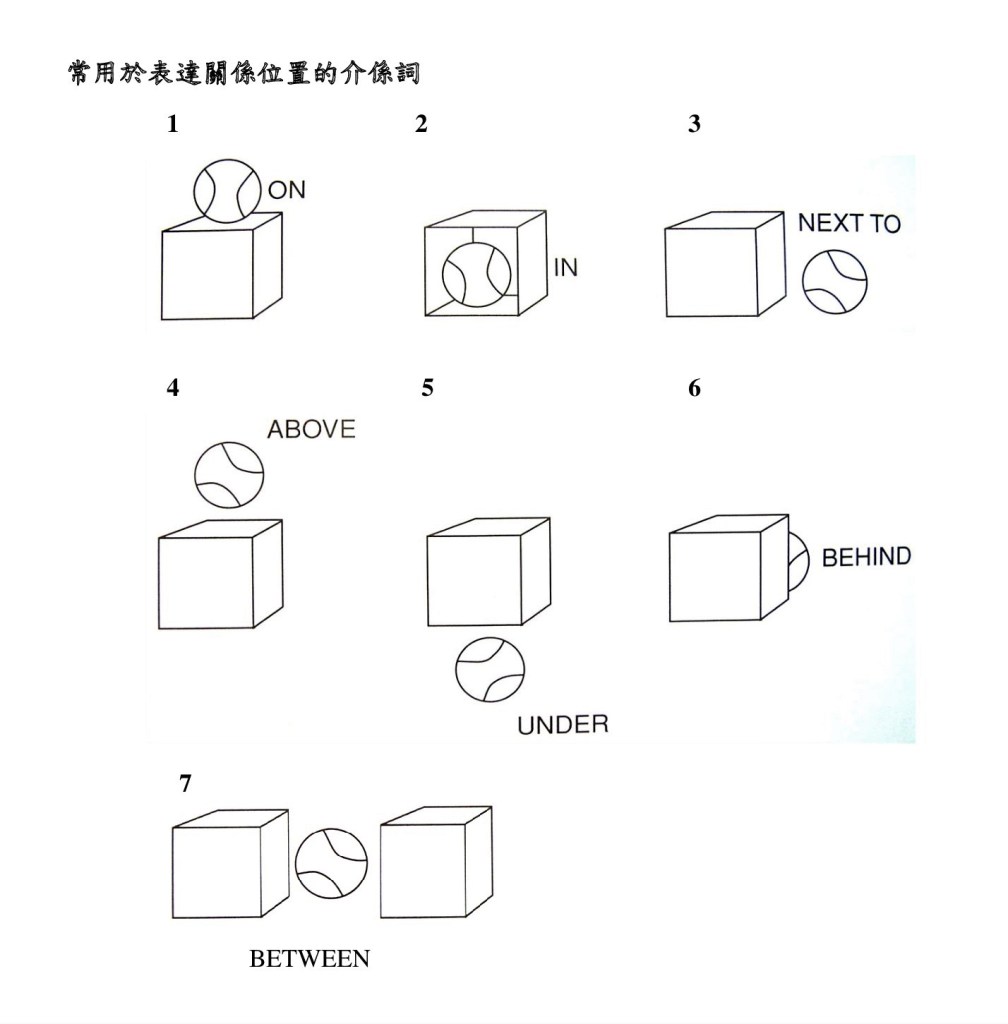
初學者造句常用到的介係詞

更多用於表達關係位置的介係詞

初級介係詞 1

實例

  1. An airplane is flying over the house. 一架飛機正飛越那間房子。
  2. A man is standing at the bus stop. 一位男士正站在公車站牌那裏。
  3. Two men are in front of the house. 兩位男士在房子前面。
  4. The boy is standing next to a man. 那位男孩正站在一位男士旁邊。
  5. A dog is hiding behind a tree. 一隻狗躲在樹後面。
  6. The woman is above a man. 那位女士正在一位男士上方。
  7. The man is between a woman and a man. 那位男士正在一位女士跟一位男士之間。
  8. A ladder is against the house. 一個樓梯靠著牆。
  9. The woman is near the house. 那位女士正在房子附近。
  10. A man is walking towards the house. 一位男士正走向那間屋子。
  11. A black dog is among some birds. 一隻黑色的貓在一些鳥之間。
  12. A cat is under the car. 一隻貓正在車子下。
初級介係詞 2

實例

  1. A bird is flying off the house. 一隻小鳥飛離開屋子。
  2. The bus stop is opposite the house. 公車站牌在屋子對面。
  3. An old man is walking along the street. 一位老先生沿著街道走路。
  4. The old man is walking past the house. 那位老先生正走路經過屋子。
  5. A man is running across the street. 一位男士跑步越過馬路。
  6. A woman is walking away from the house. 一位女士正走路離開屋子。
  7. A man is walking out of the house. 一位男士正走出屋子。
  8. A boy is walking around the pond. 一個男孩繞著池塘走路。
  9. A man is walking through the pond. 一位男士走路穿越池塘。
  10. A man is sitting by the wall. 一位男士正坐在牆邊。
  11. A man is going down the ladder. 一位男士正在下樓梯。
  12. A man is going up the ladder. 一位男士正在上樓梯。

如何感覺要用甚麼介係詞呢?例如,在車上是「in a bus」還是「on a bus」?介係詞in的基本定義是「在裡面」,如果你要表達「在車上有24個座位」就用in,There are 24 seats in the bus. in是一個空間裡的感覺。如果是在車上看到外面美麗風景就用on,It is a comfortable ride with beautiful views on the bus. on是在最上方,上方沒有阻擋的感覺,從這個概念延伸。

我們用in的基本觀念來延伸其含義,in是在一個大空間範圍裡面,所以這裡面的一個方向也用in,例如I have interest in science. (我對科學這一方面有興趣),on是在由上方壓下來的力量,例如Climate has a big effect on buildings. (天氣對建築物有很大影響)。而against原本是「緊靠著」,也就是兩方的力量互相抵銷,進而延伸出「反對」的意思,Tom said something against me. (Tom說了些反對我的話。)

介係詞的延伸運用
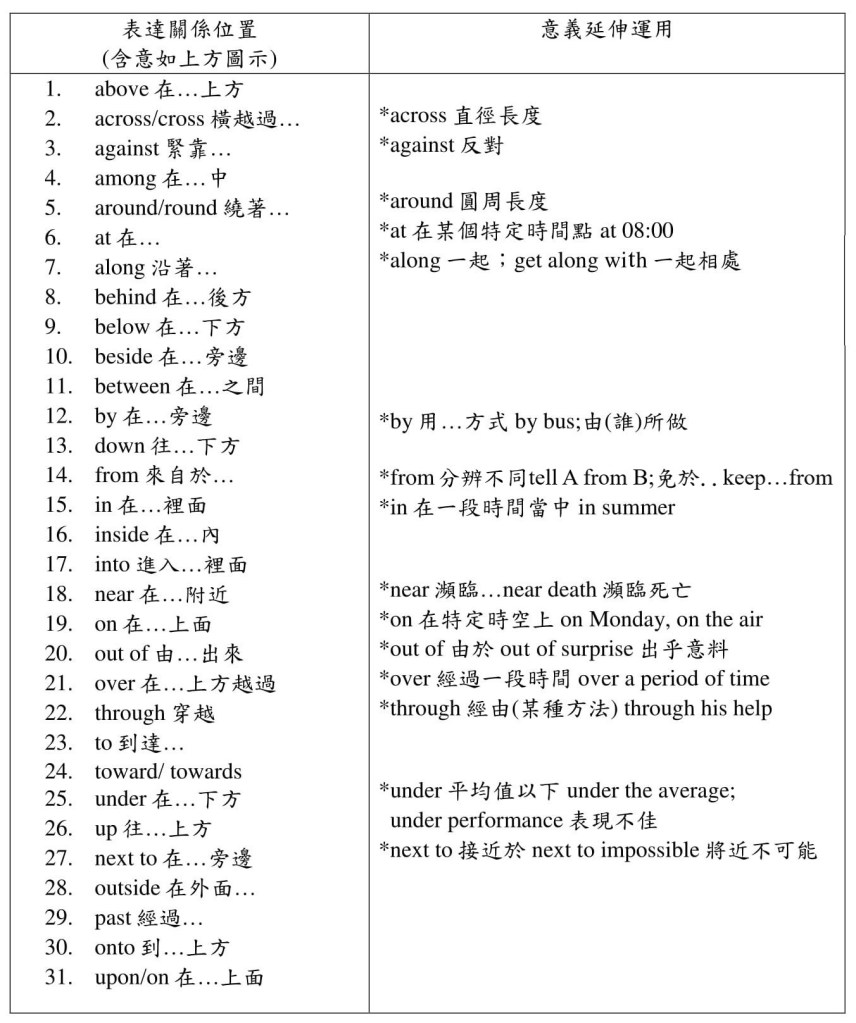
中級介係詞延伸運用

所以介係詞的選擇並不是只有一個標準答案,可能因表達不同而有兩三種選項,重點是你要表達甚麼,We walked through the park. We walked around the park. We walked over the park. We walked under the park. 這些句子因為不同的介係詞而有不同的含意。

想要大量英語全文說寫進行遠距訓練,可以參考唯一進行全文輸入輸出訓練課程。
7 this, that, there, a, the

7-1 This/That/These/Those 這個/那個/這些/那些

當學習者學會用人稱代名詞I/You/He/She/They造基本的句子之後,接著就要用非人稱代名詞來造句,也就是this, that / these, those 這個,那個 / 這些,那些,還有最常使用的倒裝句型There is/There are

this表示身旁的事物,that表示遠方的事物。
  1. This/ That這個/那個都是用於只有一個或無法計算數量,也就是單數名詞或不可數名詞,因此用要注意動詞的使用要配合單數主詞。
    This用於表示就在旁邊的物品,That用於表示在遠處的物品。請看下方兩個例句:
    (1) My book is on my desk. This is my book.
    (2) Your book is on your desk. That is your book.
  2. These/ those這些/那些都是用於數量超過一個的物品,也就是複數名詞,因此用要注意動詞的使用要配合複數主詞。
    These (這些) 用於表示在旁邊的物品,Those (那些)用於表示在遠處的物品。請看下方兩個例句:
    (1) My books are on my desk. These are my books.
    (2) Your books are on your desk. Those are your books.
  3. 更多例句:
    (1) This photo shows my grandparents and my father.
    (2) These photos are very important to me.
    (3) That cookie is not for you. It is for my dog.
    (4) Those cookies are for everyone. Don’t eat them all.

7-2 There is/ There are基本倒裝句

中文也有倒裝句,當我們想表達「你的書在那裏」但我們可能說成「那裏是你的書」,這就是倒裝句,也就是不先講主詞,卻先講地方副詞。英文也是一樣。
例如:A book is there on the desk. There is a book on the desk.
說明:

  1. 通常句子是由主詞開頭A book is there on the desk. 倒裝句通常是由副詞開頭There is a book on the desk. 這樣的句子讓許多初學者以為there是句子的主詞,其實這種表達是倒裝句型,也就是主詞是a book,不是There。
  2. 這樣子的表達模式非常普遍,只要是要表達某樣東西在哪裡就常常出現。
    (1) A bird is there in the tree. = There is a bird in the tree. 有一隻小鳥在樹上。
    (2) Four birds are there in the tree. = There are four birds in the tree. 有四隻小鳥在樹上。
    (3) Is there a bird in the tree?
    (4) Are there four birds in the tree?
  3. 要問甚麼地方有多少某樣東西常常用how many提問:
    (1) How many books are there in the bag? 那本書裡面有幾課?
    There is one book in the bag.
    (2) How many students are there in the school? 那所學校有多少學生?
    There are 430 students in the school.
  4. 常出現的錯誤為直接翻譯。
    (1) 有一本書在那邊桌上 Have a book there on the desk. (錯誤)
    (2) 應該是There is a book on the desk.

7-2   冠詞 a/ an/ the 應用的基本觀念:

  1. 提到某一可計算數量的名詞,而數量只有一個,就要用到a,例如a book。但是如果該名詞的第一個聲音是母音則用an,例如an elephant。
  2. 名詞是不可計算數量名詞,例如水或空氣等,就不需要用aan,除非是u有單位名稱,例如「一瓶水」a bottle of water
  3. 定冠詞the的運用較為複雜,基本概念如下:
    在一篇文章當中如果第一次提到一個名稱或是一個名詞,通常就用a或an,但是第二次提到同一個名詞,因為是指定的對象,所以通常用定冠詞the 。仔細看下面句子中的a以及the的運用。

    I have a book. The book is about a man. The man works very hard.

  4. 除非特殊需要,否則人名或地名等專有名詞不需要加任何的冠詞,例如Taiwan,而不是the Taiwan,Mary而不是the Mary,除非當場有兩個Mary,而必須指定是哪一個,例如The Mary in T-shirt (穿T恤的Mary)。
  5. 獨一無二的東西通常會在前方加the,像是The earth地球、the sun太陽、the world世界。

英文搭配字:升級口說及寫作

Common Binomial Expressions in English

搭配字組的順序通常是固定的,不建議隨意變動。
想要練習將單字片語應用於說寫中?請進一步了解超凡遠距全文輸入輸出訓練

  1. all or nothing竭盡全力;用極端方式­- either completely or not at all
    She either loves you or hates you. It’s all or nothing with her.
    她要不是愛你,就是恨你,就這麼極端。
  2. back and forth來來回回moving in one direction and in the opposite 
    She swayed gently back and forth to the music.
    她隨著音樂的節奏輕輕地來回搖擺著。
  3. beck and call聽命於always willing and able to do whatever someone asks
    Go and get it yourself! I’m not at your beck and call.
    自己去拿!我才不聽你使喚呢。
  4. bells and whistles華麗的點綴­- special features that are added to a product
    Manufacturers still build luxury cars with all the bells and whistles.
    製造商們依然在生產各種花俏華麗功能的豪華汽車。
  5. bits and pieces七零八碎;零碎的工作small things or jobs of different types
    The Airport Railway is being constructed in bits and pieces phase by phase. 
    機場鐵路是一段一段分期興建,全無系統可言。
  6. bricks and mortar傳統實體運作
    Click businesses are usually more flexible than brick-and-mortar operations.
    網路事業經常比實體運作靈活。
  7. bread and butter謀生的職業a job for the money you need to live
    Gardening is my bread and butter right now.
    眼下園兿工作是我的謀生之道。
  8. by and large大體上,一般而言- overall; with an overview
    I don’t like everything about my job, but by and large it’s very enjoyable.
    雖然有些小的地方讓我不太滿意,但總的來講我還是很喜歡這份工作的。
  9. cut and dried已成定局的already decided and unlikely to be changed
    We need a cut-and-dried decision by the end of the week.
    到這週末我們要把這事徹底定下來。
  10. cut and thrust唇槍舌劍interesting and exciting arguments
    She enjoys the cut and thrust of party politics.
    她喜歡黨派政治中的唇槍舌劍。
  11. do’s and don’ts規則rules about actions and activities
    The teacher spent ten minutes explaining all the dos and don’ts in the classroom..
    老師花了十分鐘解釋課堂紀律。
  12. (from) far and wide從四面八方from a large number of places
    People came from far and wide to see the house.
    人們從各地前來參觀這所房子。
  13. fight tooth and nail竭盡全力– work very hard to get something
    We fought tooth and nail to get the route of the new road changed.
    我們奮力抗爭,爭取改變新修道路的路線。
  14. give or take互相讓步遷就willingness to accept suggestions
    In every friendship there has to be some give and take.
    任何一份友誼都需要雙方互相忍讓。
  15. hustle and bustle喧囂、忙亂、使人心煩
    I don’t like the hustle and bustle of office’s life.
    我不喜歡辦公室裡忙碌的人生。
  16. in step協調,一致/ out of step步伐錯亂
    TV companies need to keep in step with public opinion.
    電視公司需要順應民意。
    I’m not good at dancing. I always get completely out of step.
    我不擅長跳舞,總是踩不到點上。
  17. last but not least最後但同樣重要的importantly after everyone else
    I would like to thank all my colleagues and, last but not least, my husband.
    我要感謝所有同事,最後同樣要感謝我的丈夫。
  18. life-and-death生死攸關的involving the possibility that someone will die
    We were now in a life-and-death situation.
    我們現在處於生死攸關的情形下。
  19. little by little漸漸地
    Little by little the flood water receded.
    洪水漸漸退了。
  20. live and learn(對所知感驚訝)真想不到finding that something that is surprising
    I had no idea they were related. Oh well, you live and learn.
    我一點都沒想到他們之間還有聯繫。唉,真是想不到啊。
  21. loud and clear清晰易懂的very clear and easy to understand
    I can hear you loud and clear.
    我能非常清楚地聽到你講話。
  22. make or break不成則敗的great success or complete failure.
    The council’s decision will make or break the local theater.
    政務委員會將要決定當地劇院的命運。
  23. more or less或多或少- mostly I hope my explanation will prove more or less helpful to you.
    但願我的解釋會對你多少有點幫助。
  24. movers and shakers有權勢的人people with a lot of power and influence
    Movers and shakers are assembling in Brussels for the summit.
    行動派人士聚於布魯塞爾,即將展開一場峰會。
  25. name and shame公開指責to publicly say that a person has done something wrong
    The report names and shames companies that are not doing enough to fight industrial pollution.
    這報導公開抨擊那些未盡力制止工業污染的公司。
  26. neat and tidy乾淨俐落
    This is a neat and tidy method to take on the responsibility. 
    這是一個能承擔這個任務的乾淨俐落的方法。
  27. nuts and bolts 基本要素、具體細節- the practical facts about a particular thing
    Let’s get down to the nuts and bolts of how we are to achieve our goals.
    我們要達成既定目標,就得從這些具體細節著手。
  28. odds and ends零碎東西,零星雜物- various things of different types
    Big things were moved to the house, but there are a few odds and ends left.
    我把大部分大傢什都搬到新房去了,但還有些零碎的東西要收拾。
  29. on and off間歇地sometimes
    I’ve had toothache on and off for a couple of months.
    我牙疼斷斷續續了幾個月。
  30. out and about活躍的;正常行動的doing the things you usually do
    She’s making a good recovery and she should be out and about in a few days.
    醫生說她復原得很好,幾天後應該就可以正常行動了。
  31. out-and-out徹頭徹尾的,十足的 in every way
    The whole project was an out-and-out disaster.
    整個企劃案徹底搞砸了。
  32. out and away (與最高級連用)無可比擬的by a great amount
    She is out and away the best student I have ever taught.
    她無疑是我教過的學生當中最出色的。
  33. part and parcel是…必要部分to be a feature that cannot be avoided
    Being recognized in the street is part and parcel of being a celebrity.
    走在街上被人認出是身為名人在所難免的。
  34. peace and quite寧靜- tranquility and freedom from disturbance.
    He might have ended his days in quiet and peace.
    他本來可以在寧靜與和平中結束他的一生。
  35. pros and cons好處與壞處- the advantages and disadvantages
    We’re just weighing up the pros and cons of moving to a bigger house.
    我們正在權衡搬進大房子裡住的利弊。
  36. rock and roll非常流行very popular and fashionable
    Could hip-pop be the new rock and roll?
    嘻哈會火爆流行嗎?
  37. safe and sound安然無恙- not in danger or likely to be harmed
    In some cities you don’t feel safe and sound going out alone at night.
    在某些城市,夜晚獨自外出會覺得不安全。
  38. short and sweet短且令人高興的- surprisingly short in a way that is pleasing
    This morning’s meeting was short and sweet.
    今天早上的會很短很棒。
  39. sick and tired of煩厭- to have experienced too much of someone or something
    I’m sick and tired of you asking me for money.
    我對你跟我要錢這事感到很煩厭.
  40. dim and distant遙遠模糊的from the past and not clearly remembered
    The times of huge profits are now a dim and distant memory.
    巨額利潤的時代已經是遙遠模糊的過去了。
  41. skin and bones暴瘦- extremely thin
    Your brother is just skin and bones – has he been sick?
    你的弟弟非常瘦,他生病了嗎?
  42. slice and dice切割成小塊
    To save money for the company, our boss sliced and diced our marketing budget
    公司為了節約開支,老板大幅度地減少了用于市場行銷的預算資金
  43. song and dance 長篇謊言;胡言亂語 long story that is not true
    She gave me some song and dance about how busy she is.
    她對我嘮叨了半天說她有多忙
  44. sooner or later遲早
    Sooner or later she’s going to realize what a mistake she’s made.
    她遲早會意識到她犯了一個多麽嚴重的錯誤。
  45. spick and span嶄新的;極整潔的- very clean and tidy
    His task was to keep the place spick and span.
    他的工作是保持那地方乾淨清潔。
  46. take it or leave it接不接受由你accept or refuse the offer completely
    It’s my final offer. You can take it or leave it.
    那是我最後的報價,接不接受由你。
  47. touch and go形勢不確定的– an uncertain situation
    The doctor says that it’s touch-and-go whether Mary will be okay.
    醫生說瑪麗能否挺過去還很難說。
  48. tossing and turning輾轉難眠- to move about and turn over in bed
    What is the key to sleep well without tossing and turning?
    晚上不會睡不著的關鍵是什麼?
  49. tooth and nail竭盡全力to try very hard
    We fought tooth and nail to get the route of the new road changed.
    我們奮力抗爭,爭取改變新修道路的路線。
  50. ups and downs盛衰;沉浮good and bad things
    Like most married couples we’ve had our ups and downs, but life’s like that.和大多數已婚夫婦一樣,我們也經歷過沉浮波折,但生活就是如此。
  51. wear and tear (一時期內的)磨損,損耗- the damage during a period
    Seat covers on buses take a lot of wear and tear.
    火車上的座套磨損比較嚴重。
  52. wheeling and dealing玩弄手腕using clever methods to get advantages
    Mr. Smith made a fortune by wheeling and dealing on the stock market.
    Mr. Smith在股票市場上投機取巧,發了大財。
  53. willy-nilly無可奈何地something happening against your will
    Both sides were drawn, willy-nilly, into the conflict.
    雙方都不由自主地被捲進了衝突中。
  54. hands down輕鬆取勝to win very easily
    The last time we played tennis, he beat me hands down.
    我們上一次打網球時他輕鬆將我擊敗。
  55. wine and dine設酒宴款待to entertain by giving food and drinks
    The survey concludes that most women like to be wined and dined on the first few dates.
    調查的結論是,大多數女性在最初幾次約會時喜歡去餐館用餐小酌。

because of/ due to/ owing to/ as a result of/ on account of/ thanks to在句子中可以互換嗎?

由於duebecause詞類不同,所以在結構上是要注意修飾的是甚麼詞性。Due是形容詞,所以修飾名詞,because是副詞,所以修飾動詞或形容詞。

例句1:表達「夏令營因為颱風而取消。」

  • The cancellation of the summer camp was due to the typhoon.
  • The summer camp was canceled because of the typhoon.

第一句使用due to因為是修飾cancellation這個名詞。
第二句使用because of因為是修飾was canceled這個動詞。

例句2:表達「十字路口的重大車禍導致交通阻塞。」

  • The traffic jam was due to a terrible accident at the intersection.
  • The traffic jam happened because of a terrible accident at the intersection.

但是愈來愈多英語使用者,其中不乏母語人士,將because of/ due to/ owing to/ as a result of/ on account of/ thanks to都交換使用,所以大家也就愈來愈不以為意。但是回答Why開頭的問題時還是要用because回答才正確。而thanks to除非是反諷的用意,否則最好用於正面的事情。

例句3:表達「夏令營因為颱風而取消。」因此必須待在家讀書,用thanks to表達反諷的含意。

  • The summer camp was canceled because of the typhoon.
  • The summer camp was canceled thanks to the typhoon. Now we can only study at home.

無論您是(1)注重口說寫作的國高中生; (2)提升競爭力的英文老師; (3)努力成為各科雙語老師; 或(4)提升專業英語說寫能力的碩博生或社會人士。請洽客製化訓練課程詢問專線

唯一雲端虛擬教室,將想法全文輸入輸出訓練🎯,雲端專人訂正提供改善建議。
影片線上教學平台:Youtube教學頻道
提升國際競爭力 加入超凡遠距