42   主詞動詞一致性

單數的主詞:下列句子中的主詞視同單數

  1. Twenty years is a long time.
  2. A million dollars is a lot of money.
  3. Many a boy is in the playground now. = Many boys are in the playground now.
  4. More than one person is in the hall.
  5. News (politics/ economics/ mathematics/ linguistics) doesn’t interest me at all.

複數的主詞:下列句子中的主詞視同複數

  1. The police have arrested the suspect.
  2. Poultry are raised everywhere in the countryside.
  3. The crew are working hard to row the boat.
  4. People nowadays spend a lot of money on electric appliances.

用單數動詞表達整體,用複數動詞表達全部個體的集合的字:
class / family / audience / committee

例句:
His family is a big family. His family are all teachers.
A large audience was in the auditorium last night. All the audience were moved.

The + Adj. (表達抽象意義) 視為單數主詞
The + Adj. (表達全部屬性的人) 視為複數主詞

例句:
The good is an important part of human nature. 善良是人性中重要的一部分。
The rich are not always happy. 富有的人不會永遠快樂。

下列表達由B決定動詞為單數或複數動詞,因為最靠近動詞。

  1. A or B + 動詞…
  2. Either A or B + 動詞…
  3. Neither A nor B + 動詞…
  4. Not only A but (also) B + 動詞…

例句:
Her older sister or parents have a successful business.
Either May’s parents or her sister has a successful business.
Neither the twin brothers nor their father was seen at the park yesterday.

下列表達由A決定動詞為單數或複數動詞,因為介系詞片語在句中位置可改變。

  1. A with B + 動詞…
  2. A as well as B + 動詞…
  3. A no less than B + 動詞…

例句:
The father dog with its four baby dogs comes into the village for food every day.
(說明:主詞the father dog是第三人稱單數,因此動詞come加上s。)

唯一雲端虛擬教室,將想法全文輸入輸出訓練🎯,雲端專人訂正提供改善建議。
影片線上教學平台:Youtube教學頻道
提升國際競爭力 加入超凡遠距 。
無論您是(1)注重口說寫作的國高中生; (2)提升競爭力的英文老師; (3)努力成為各科雙語老師; 或(4)提升專業英語說寫能力的碩博生或社會人士。請洽客製化訓練課程詢問專線

訓練方法總攬

核心訓練(前四項)

目的:提升英文閱讀理解,也同時提升中文口條。

方法:先閱讀英文文章>朗讀文章、再將文章逐句翻譯成邏輯中文,同時錄音。

  1. 先快速瀏覽標題及參考單字,試著聯想文章可能內容。
  2. 閱讀全文,並找出每一段落的重點。
  3. 將重點重新組織成流暢的摘要。
  4. 最後將組織好的摘要以英文重新演說並錄音,完成後上傳至雲端。

目的:提升英文全文口說組織能力。

方法:將中文文章邊讀邊翻譯成英文並錄音。

  1. 先看標題及瀏覽參考單字及全文。
  2. 研究有困難部分並註記重點。
  3. 快速練習以自己的方式造英文句子,簡潔易懂即可,不要逐句寫成英文。
  4. 碰到困難時可聽作業參考檔。
  5. 最後邊讀邊翻譯成英文並錄音,完成後上傳至雲端。

目的:提升英文聽力及口說全文能力。

方法:聽英文文本音檔,邊聽邊做筆記,根據筆記以英文演說並錄音。

  1. 先看標題及瀏覽參考單字,試著找出標題與單字的關聯。
  2. 開始聽英文聲音檔,在能持續聽的狀況下筆記重點,筆記簡潔自己能懂就好,筆記可以用圖像、符號、中文等任何方式進行,但不要逐句寫成英文。
  3. 可再聽一次補充筆記內容,然後按筆記內容以中文在心中演練輸出。
  4. 最後用英文以自己的方式重建文意並且錄音,完成後上傳至雲端。

目的:提升文法句型及單字的應用能力,並提高表達的精準度。

方法:將中文文章逐句翻譯成英文,將成果上傳至雲端資料夾。
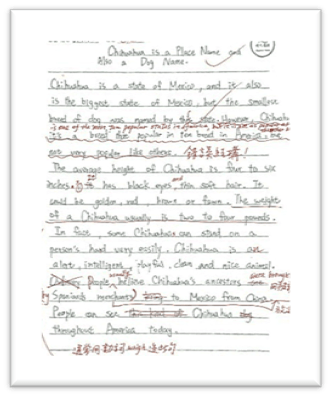
  1. 先看標題及快速瀏覽中文文章以理解文意。
  2. 研究可能困難,並註記重點。
  3. 在電腦用WORD文書處理系統以1.5倍行距打字,或使用專用作業紙手寫翻譯。
  4. 完成後在燈光充足條件下,如下圖在作業正上方拍照、裁切,完成後上傳至雲端。

V. 強化訓練()

目的:提升英文閱讀理解,並能輸出英文摘要。

方法:閱讀英文文章後說出重點摘要。

  1. 先快速瀏覽標題及參考單字,試著聯想文章可能內容。
  2. 閱讀全文,並找出每一段落的重點。
  3. 將重點重新組織成流暢的摘要。
  4. 最後將組織好的摘要以英文重新演說並錄音,完成後上傳至雲端。

目的:提升根據主題寫作的創造能力

方法:制作寫作大綱完成寫作

  1. 仔細閱讀題目指示,務必按照指示完成寫作,例如段落數或字數。
  2. 在電腦用WORD文書處理系統行距1.5、字體12打字,或使用專用作業紙手寫,寫作筆跡工整。
  3. 完成以WORD、PDF、或圖片(如上圖在燈光充足下,在作業正上方拍照、裁切),上傳至雲端資料夾。

目的:提升專業領域的英語聽說讀寫能力。

方法:訓練方法採用上方所有訓練模式,但輸入輸出內容為財經或科技專業領域。雖然這兩類的涵蓋領域仍然相當地廣,但可以幫助學習者擴充這兩大領域的背景知識,並練習以英語分享這些知識,相關內容請。

附加訓練項目

目的:提升各種主題的英語口說能力。

方法:根據主題參加線上討論,發表該主題的各種看法。無法上線學員可進行錄音。

烏俄(惡)之戰不是烏克蘭的戰爭

學習單字

  1. invasion侵略
  2. military軍事的
  3. aggressive好戰的
  4. amass聚集
  5. diplomatic外交
  6. sanction經濟制裁
  7. overwhelming全面的
  8. indiscriminate無差別的
  9. prompt造成
  10. collapse瓦解
  11. justify合理化
  12. solemn神聖
  13. pledge承諾

The Root Cause of the Ukraine War
俄羅斯與烏克蘭戰爭的根源

Russia’s invasion of Ukraine is the biggest military mobilization in Europe since World War II.
俄國對烏克蘭的侵略是第二次世界大戰之後歐洲最大的軍事的動員,
It seems that an aggressive Russian leader amassed troops and invaded its neighbor.
看起來似乎是一個好戰的國家領導人聚集軍隊,然後侵略鄰國。
Then several rounds of diplomatic talks between Russia and Ukraine have failed to stop the war, so some countries led by the US stood together to impose sanctions on Russia over the invasion.
接著就是俄羅斯跟烏克蘭之間進行幾輪失敗的外交談判,美國為主導的西方國家開始站在一起,對俄羅斯的侵略行為實施經濟制裁
Taiwan is one of those countries.
台灣也加入這個制裁的行列。

However, Russia didn’t stop there.
然而俄羅斯並沒有因此而停止,
It has been increasingly intensifying attacks, flattening cities with overwhelming and indiscriminate firepower.
反而不斷的加強攻擊,對城市進行全面的無差別的砲火襲擊。
The war has claimed thousands of lives.
這場戰爭已經造成了數千人死亡,
It has also prompted more than two million people to flee Ukraine in less than two weeks, spurring refugee crisis.
戰火造成超過2百萬人兩周內逃離烏克蘭,造成難民危機。

While most people focus on the invasion, fatalities, and refugees, few focus on the cause.
相對於大多數人將焦點放在侵略、死傷、及難民,很少人去注意到這場戰爭的起因。

After the Soviet Union collapsed in the early 1990s, NATO expanded eastward, eventually taking in most of the European nations that had once been in the Soviet Union.
在1990年代初期蘇聯瓦解後,北大西洋公約組織往東擴展,最終將歐洲大多數原屬於蘇聯的國家的納入北約。
For example, the Baltic republics of Lithuania, Latvia and Estonia joined NATO in 2004.
例如,波羅的海的立陶宛、拉脫維亞、愛沙尼亞共和國都在2004年加入了北約。
As a result, NATO moved hundreds of miles closer to Moscow, directly bordering Russia.
結果就是北大西洋公約組織擴張到距離莫斯科只剩下700英里,已經直接跟俄國交接了。
And in 2008, NATO stated that it planned to enroll Ukraine.
而2008年北約公開宣稱要將烏克蘭納入北約。

Russia claims that the West broke a promise it made in the 1990s not to expand NATO and is using this claim to justify its invading Ukraine.
俄羅斯宣稱西方國家沒有遵守1990年代的承諾:北約不向東擴展,俄羅斯也因此將侵略烏克蘭合理化
In a speech at the Munich Security Conference in 2007, Putin accused Western powers of violating a solemn pledge by enlarging NATO. 
2007年普丁在慕尼黑安全會議的一場演說中說:西方各國違反了不擴張北約的這項神聖承諾。

However, NATO has not stopped expanding since the fall of the Soviet Union, growing from 17 countries in 1990 to 30 today, several of which were once part of the Soviet-led Warsaw pact.
然而蘇聯解體之後,北約從未停止繼續向東擴張,從1990年代的17個成員國,擴張到今天的30個成員國,這些北約成員國中好幾個是屬於過去蘇聯時代的華沙公約成員國,
As a result, Russia claims that it is protecting itself.
因此俄國宣稱目前只是在進行自我保護。

Ukraine is indeed suffering between two superpowers that are pushing against each other.
烏克蘭的確在兩大強權互相較勁的夾縫中遭受極大苦難,
Hopefully, Taiwan doesn’t have to in a similar situation.
希望台灣不需要處於相同的困境。

加入超凡遠距進行全文輸入輸出訓練,立即提升國際語競爭力。

Unit 49   Gossiping and Talking

  1. Think about your recent chats with friends or coworkers: how can you tell when a conversation is “just sharing” versus gossip? What’s a real example?
    想想你最近和朋友或同事的聊天:你怎麼分辨「只是分享」和「在八卦」?請舉一個真實例子。
  2. Be honest: when you hear a bit of juicy news about someone, what makes it tempting to pass it on—curiosity, bonding, boredom, stress, or something else?
    說實話:當你聽到一點關於別人的「勁爆消息」時,什麼原因會讓你想轉述出去——是好奇、想拉近關係、無聊、壓力,還是別的?
  3. Where’s your personal line? What kind of “talk about other people” feels harmless to you, and what kind feels unfair or harmful? Why?
    你的界線在哪裡?哪一種「談論別人」你覺得無傷大雅?哪一種你覺得不公平或有傷害?為什麼?
  4. People say “Gossip is the spice of office life.” In your experience, does it make the workplace feel more connected—or more toxic? What’s one situation you’ve seen?
    有人說「八卦是辦公室生活的調味劑。」以你的經驗,它讓職場更有凝聚力,還是更有毒?你看過的一個例子是什麼?
  5. In your daily life, what kind of conversation helps you most: small talk, emotional support, problem-solving, or deep ideas? Why?
    在你的日常生活中,哪一種談話最能幫助你:閒聊、情感支持、解決問題、或深入想法?為什麼?
  6. At work or in a group, when does chatting become necessary teamwork—and when does it become a distraction? What’s a moment you remember?
    在工作或團體裡,什麼時候聊天是必要的合作,什麼時候又變成干擾?你印象深刻的一次情況是什麼?
  7. When you talk with your family (or close people), what topics come up the most—money, health, school/work, feelings, plans—and which ones do you wish you talked about more?
    當你和家人(或親近的人)聊天時,最常出現哪些話題——金錢、健康、學校/工作、感受、計畫?你希望你們能多聊哪些?
  8. Why do you think people (maybe even you) are curious about celebrity private lives? What need does it meet—entertainment, comparison, escape, or something else?
    你覺得為什麼人們(甚至可能包括你)會對名人的私生活好奇?這滿足了什麼需求——娛樂、比較、逃避、還是別的?
  9. Have you ever been misunderstood or had a rumor/story about you spread in a way that wasn’t true? How did it affect you, and what did you do?
    你曾經被誤解,或是有不實的謠言/故事在你身上流傳嗎?它對你造成什麼影響?你怎麼處理?
  10. Many people feel other people’s lives look more exciting (especially online). When have you felt that comparison? What helps you come back to your own life?
    很多人覺得別人的生活看起來比較精彩(尤其在網路上)。你什麼時候有過這種比較感?什麼方法能幫你回到自己的生活節奏?

Vocabulary List

  1. gossip八卦
  2. virtue美德
  3. spice香料
  4. necessary必須的
  5. wronged冤枉
  6. average一般的

無論您是(1)注重口說寫作的國高中生; (2)提升競爭力的英文老師; (3)努力成為各科雙語老師; 或(4)提升專業英語說寫能力的碩博生或社會人士。請洽客製化訓練課程詢問專線

唯一雲端虛擬教室,將想法全文輸入輸出訓練🎯,雲端專人訂正提供改善建議。
影片線上教學平台:Youtube教學頻道
提升國際競爭力 加入超凡遠距 

Unit 48 Crimes

  1. When you walk home at night in your area, how safe do you honestly feel—and what makes you feel that way?
    你晚上走路回家時,老實說你覺得多安全?是什麼讓你有這種感覺?
  2. What’s the one situation you worry about most (e.g., theft, scams, harassment), and why does it stick in your mind?
    你最擔心哪一種狀況(例如偷竊、詐騙、騷擾)?為什麼這件事會讓你一直放在心上?
  3. Have you or someone close to you ever experienced a crime or near-miss? What happened, and how did it change your habits?
    你或你身邊的人有遇過犯罪或差點遇到嗎?發生了什麼?那之後你做了哪些改變?
  4. In your daily life in Taiwan, what type of crime feels the most “common” to you—and where do you notice it (news, school, neighborhood, online)?
    以你在台灣的生活經驗,你覺得哪種犯罪最常見?你通常在哪裡注意到(新聞、學校、社區、網路)?
  5. Think of a crime case you’ve heard about recently in Taiwan. What part of it felt closest to your life, and did it change how you act?
    想一個你最近聽到的台灣犯罪案件。哪個部分讓你覺得離你的生活最近?它有影響你做事的方式嗎?
  6. If you had to guess the biggest reasons people commit crimes, which 2–3 factors feel most real to you (money pressure, family, friends, addiction, unemployment, anger, etc.)? Why?
    如果要你猜人們犯罪的主要原因,你覺得最真實的2–3個因素是什麼(經濟壓力、家庭、朋友、成癮、失業、情緒等)?為什麼?
  7. Do you believe punishments like fines or jail actually stop crime? If not, what prevention would you personally invest in—education, mental health support, jobs, stricter policing, community programs?
    你覺得罰金或坐牢真的能阻止犯罪嗎?如果不太能,你會想把資源投在哪裡:教育、心理支持、就業、加強警力、社區方案?
  8. How do movies, TV shows, games, or short videos influence people’s views on violence—do you feel they affect behavior, or mostly reflect reality?
    電影、影集、遊戲或短影音會怎麼影響人們對暴力的看法?你覺得它們會影響行為,還是主要只是反映現實?
  9. Have you ever done something “small” that could be considered breaking a rule (jaywalking, downloading, littering, using someone else’s account)? What made you justify it at the time?
    你有做過哪種「小事」其實算是違規或接近違法(闖紅燈、下載盜版、亂丟垃圾、借用帳號)?當時你怎麼說服自己可以?
  10. Which online crime worries you most—scams, hacking, identity theft, cyberbullying, fake news—and what’s one safety habit you’ve started (or should start)?
    你最擔心哪種網路犯罪:詐騙、駭客、盜用個資、網路霸凌、假消息?你已經開始(或應該開始)哪一個自我保護習慣?

參考單字

  1. secure安全的
  2. deterrent威懾力量
  3. victim受害者
  4. commit (a crime)犯罪
  5. punishment懲罰
  6. poverty貧窮
  7. unemployment失業
  8. violence暴力
  9. littering亂扔垃圾
  10. acceptable可接受的

無論您是(1)注重口說寫作的國高中生; (2)提升競爭力的英文老師; (3)努力成為各科雙語老師; 或(4)提升專業英語說寫能力的碩博生或社會人士。請洽客製化訓練課程詢問專線

唯一雲端虛擬教室,將想法全文輸入輸出訓練🎯,雲端專人訂正提供改善建議。
影片線上教學平台:Youtube教學頻道
提升國際競爭力 加入超凡遠距 

Unit 44   Habits & Addictions

  1. What’s one achievement you’re genuinely proud of—and why does it matter to you personally?
    你最真心感到驕傲的一項成就是什麼?為什麼它對你很重要?
  2. When you look back, what small “win” changed your life more than you expected?
    回想一下,有沒有哪個看似小的成功,卻意外地改變了你很多?
  3. What goal do you want to achieve in the next 3–6 months—and what is your first step this week?
    你未來3~6個月最想達成的目標是什麼?你這週的第一步會是什麼?
  4. What’s a failure you still remember clearly—and what did it teach you about yourself?
    你仍然記得很清楚的一次失敗是什麼?它讓你更了解自己什麼?
  5. How has one past failure shaped the way you make decisions today?
    過去某次失敗如何影響你現在做決定的方式?
  6. When you fail, what helps you recover faster: time alone, talking to someone, changing your plan, or something else?
    當你失敗時,什麼最能幫你恢復:自己沉澱、找人聊聊、調整策略,還是其他方法?
  7. What do you think is the most common reason people fail: poor planning, fear, lack of support, bad timing, or giving up too early? Why?
    你覺得人最常失敗的原因是什麼:計畫不周、害怕、缺乏支持、時機不對、太早放棄?為什麼?
  8. What do you think is the biggest factor behind success: effort, talent, habits, mindset, resources, or luck? Share a real example.
    你認為成功最關鍵的因素是什麼:努力、天分、習慣、心態、資源、運氣?請用真實例子說明。
  9. Have you ever quit something because it felt too hard or you failed—would you try again now? Why or why not?
    你是否曾因為太難或失敗而放棄一件事?現在你會想再試一次嗎?為什麼/為什麼不?
  10. In your opinion, what is humanity’s greatest achievement—and how has it affected your daily life?
    你認為人類最偉大的成就是什麼?它如何影響你的日常生活?

無論您是(1)注重口說寫作的國高中生; (2)提升競爭力的英文老師; (3)努力成為各科雙語老師; 或(4)提升專業英語說寫能力的碩博生或社會人士。請洽客製化訓練課程詢問專線

唯一雲端虛擬教室,將想法全文輸入輸出訓練🎯,雲端專人訂正提供改善建議。
影片線上教學平台:Youtube教學頻道
提升國際競爭力 加入超凡遠距 

Unit 45   Achievements and Failures

  1. What’s one achievement you’re genuinely proud of—and why does it matter to you personally?
    你最真心感到驕傲的一項成就是什麼?為什麼它對你很重要?
  2. When you look back, what small “win” changed your life more than you expected?
    回想一下,有沒有哪個看似小的成功,卻意外地改變了你很多?
  3. What goal do you want to achieve in the next 3–6 months—and what is your first step this week?
    你未來3~6個月最想達成的目標是什麼?你這週的第一步會是什麼?
  4. What’s a failure you still remember clearly—and what did it teach you about yourself?
    你仍然記得很清楚的一次失敗是什麼?它讓你更了解自己什麼?
  5. How has one past failure shaped the way you make decisions today?
    過去某次失敗如何影響你現在做決定的方式?
  6. When you fail, what helps you recover faster: time alone, talking to someone, changing your plan, or something else?
    當你失敗時,什麼最能幫你恢復:自己沉澱、找人聊聊、調整策略,還是其他方法?
  7. What do you think is the most common reason people fail: poor planning, fear, lack of support, bad timing, or giving up too early? Why?
    你覺得人最常失敗的原因是什麼:計畫不周、害怕、缺乏支持、時機不對、太早放棄?為什麼?
  8. What do you think is the biggest factor behind success: effort, talent, habits, mindset, resources, or luck? Share a real example.
    你認為成功最關鍵的因素是什麼:努力、天分、習慣、心態、資源、運氣?請用真實例子說明。
  9. Have you ever quit something because it felt too hard or you failed—would you try again now? Why or why not?
    你是否曾因為太難或失敗而放棄一件事?現在你會想再試一次嗎?為什麼/為什麼不?
  10. In your opinion, what is humanity’s greatest achievement—and how has it affected your daily life?
    你認為人類最偉大的成就是什麼?它如何影響你的日常生活?

無論您是(1)注重口說寫作的國高中生; (2)提升競爭力的英文老師; (3)努力成為各科雙語老師; 或(4)提升專業英語說寫能力的碩博生或社會人士。請洽客製化訓練課程詢問專線

唯一雲端虛擬教室,將想法全文輸入輸出訓練🎯,雲端專人訂正提供改善建議。
影片線上教學平台:Youtube教學頻道
提升國際競爭力 加入超凡遠距 

Unit 43   Humans & Nature

  1. When you think about “protecting nature,” what does it mean to you personally?
    對你來說,「保護大自然」最具體代表什麼?(跟你的生活有什麼關係?)
  2. What’s one place in Taiwan where you feel most connected to nature—and why?
    在台灣,有哪一個地方讓你最能感受到大自然?為什麼?
  3. Tell us about a memorable nature experience you’ve had in Taiwan (a trip, a hike, the sea, the mountains, etc.). What did it change in you?
    分享一次你在台灣接觸大自然的難忘經驗。那次經驗帶給你什麼改變?
  4. In your opinion, what is Taiwan’s greatest “natural treasure” or “wonder”?
    你覺得台灣最值得驕傲的自然寶藏或「奇景」是什麼?為什麼?
  5. What natural landscape, plant, or animal do you think is truly unique to Taiwan?
    你認為台灣有哪些獨特的自然景觀、植物或動物?為什麼特別?
  6. What do you think people in Taiwan should stop doing to better protect nature?
    你覺得台灣人為了保護大自然,最該停止做的一件事是什麼?請說明理由。
  7. What do you personally do (or could you start doing) in daily life to protect nature? Name 2–3 actions.
    你日常生活中做過哪些保護大自然的事?或你願意從今天開始做哪2–3件事?
  8. What do you think is the biggest challenge to protecting the Earth—habits, money, convenience, politics, or something else?
    你覺得保護地球最大的挑戰是什麼?(習慣、金錢、便利、政策、觀念…?)
  9. Do you think the air quality where you live is good? If you were the mayor, what’s the first policy you would try?
    你覺得你住的地方空氣乾淨嗎?如果你是市長,你會先推動哪一個改善政策?
  10. Choose one animal you really care about (in Taiwan or worldwide). Why does it matter to you, and what’s one realistic way we could help it?
    選一種你在意的動物(台灣或世界都可以)。你為什麼在意牠?我們可以做什麼實際的事來幫助牠?

Vocabulary

  1. protect保護
  2. challenge挑戰
  3. environment環境
  4. extinction滅絕
  5. prison監獄
  6. mayor市長
  7. landscape自然景觀
  8. unique獨一無二的
  9. disadvantage劣勢
  10. endangered瀕臨絕種的
  11. wonder奇景

無論您是(1)注重口說寫作的國高中生; (2)提升競爭力的英文老師; (3)努力成為各科雙語老師; 或(4)提升專業英語說寫能力的碩博生或社會人士。請洽客製化訓練課程詢問專線

唯一雲端虛擬教室,將想法全文輸入輸出訓練🎯,雲端專人訂正提供改善建議。
影片線上教學平台:Youtube教學頻道
提升國際競爭力 加入超凡遠距 

Unit 34   Physical and Mental Health

  1. How healthy do you think you are right now? Give at least 3 reasons (habits, energy level, sleep, mood, etc.).
    你覺得自己現在健康嗎?請說出至少3個理由(習慣、精神、睡眠、情緒等)。
  2. If you feel you’re not healthy, what’s holding you back? List at least 3 reasons (stress, diet, lack of exercise, poor sleep, etc.).
    如果你覺得自己不健康,原因是什麼?列出至少3個原因(壓力、飲食、缺乏運動、睡眠等)。
  3. Which matters more to you—physical health or mental health? Explain with real examples from life.
    對你來說,身體健康和心理健康哪個更重要?請用生活例子說明。
  4. What’s the difference between physical health and mental health, and how do they affect each other? Give examples.
    身體健康與心理健康差別在哪?兩者如何互相影響?請舉例。
  5. What do you think are the top 3 habits that protect both body and mind? (e.g., sleep, exercise, relationships)
    你認為最能同時保護身心的3個習慣是什麼?(如睡眠、運動、人際關係)
  6. What are common signs that someone is mentally healthy? Share examples or situations you’ve seen.
    你覺得心理健康的人有哪些常見特徵?請用例子或情境說明。
  7. What are common signs that someone is mentally unhealthy or burning out? What warning signals should we notice early?
    心理不健康或快要崩潰的人有哪些徵兆?有哪些警訊應該提早注意?
  8. When do you usually feel stressed, and what causes it most? What coping strategy works best for you?
    你通常什麼時候最有壓力?主要原因是什麼?你最有效的紓壓方法是什麼?
  9. What life habits do you want to change (good or bad)? Choose one habit and describe a realistic plan to improve it.
    你有哪些生活習慣(好或不好)想改變?請選一個,提出可行的改善計畫。
  10. Have you ever had a health problem that taught you something? It could be allergies, an injury, a hospital stay, or a home remedy that helped. What happened and what did you learn?
    你是否曾經因為健康問題學到一課?(過敏、受傷、住院、或有效的家庭偏方都可以)發生了什麼?你學到什麼?

Vocabulary List

  1. physical身體的
  2. mental心理的
  3. stress out使人緊張焦慮
  4. cope with對抗;應付
  5. allergic過敏的
  6. home remedy家庭療法;家庭偏方
  7. hiccup打嗝
  8. insomnia失眠
  9. bellyache肚子痛

無論您是(1)注重口說寫作的國高中生; (2)提升競爭力的英文老師; (3)努力成為各科雙語老師; 或(4)提升專業英語說寫能力的碩博生或社會人士。請洽客製化訓練課程詢問專線

唯一雲端虛擬教室,將想法全文輸入輸出訓練🎯,雲端專人訂正提供改善建議。
影片線上教學平台:Youtube教學頻道
提升國際競爭力 加入超凡遠距 

Unit 42 Religions & Superstitions

  1. Do you consider yourself religious, spiritual, both, or neither? How has that shaped the way you handle stress, loss, or big life decisions?
    你覺得自己是有宗教信仰、偏靈性、兩者都有,還是都不是? 這如何影響你面對壓力、失去、或人生重大決定的方式?
  2. When you’re facing a difficult moment, where do you usually turn for comfort—faith, family, friends, routines, or something else? Why does that work for you?
    當你遇到低潮或困難時,你通常會靠什麼得到安慰——信仰、家人、朋友、固定習慣,或其他方式? 為什麼這對你有效?
  3. Have you ever followed a religious rule or taboo (food, clothes, rituals, behaviors)? What was the reason behind it, and did it feel meaningful or restrictive?
    你曾經遵守過宗教規定或禁忌嗎(例如飲食、穿著、儀式、行為)? 背後原因是什麼?你覺得它有意義,還是有點限制你?
  4. What’s a superstition you grew up with (lucky numbers, “don’t do this,” feng shui, ghost stories, etc.)? Do you still follow it—even “just in case”?
    你從小聽過或相信過哪些迷信(幸運數字、不能做的事、風水、鬼故事等)? 你現在還會照做嗎——就算只是「以防萬一」?
  5. In your daily life, what do you think is the clearest difference between religion and superstition? Where do you think the line gets blurry?
    在你的生活中,你覺得宗教和迷信最明顯的差別是什麼? 你覺得什麼時候兩者的界線會變得模糊?
  6. Do you ever visit temples, churches, or other sacred places—especially during important times (exams, illness, family events)? What do you hope to gain when you go?
    你會去廟、教堂或其他宗教場所嗎——尤其是在重要時刻(考試、生病、家庭大事)? 你去的時候通常希望得到什麼?
  7. Have you ever had an experience you couldn’t fully explain (a “sign,” answered prayer, strong gut feeling, eerie coincidence, unusual ritual experience)? How did it affect what you believe?
    你有沒有遇過一種「很難用理性完全解釋」的經驗(例如徵兆、禱告成真、強烈直覺、巧合到可怕、特殊儀式經驗)? 這件事如何影響你的信念?
  8. Do you think religion and science can peacefully coexist in your mind? Share a situation where you felt they matched well—or conflicted.
    你覺得宗教和科學在你的想法裡可以共存嗎? 請分享一次你覺得它們很合得來,或是互相衝突的情況。
  9. Some people donate lots of time or money to religious groups. If you’ve ever donated or volunteered, what motivated you? If not, what would make you willing to?
    有些人會投入很多時間或金錢在宗教團體上。 如果你捐過款或當過志工,是什麼動機?如果沒有,什麼情況會讓你願意?
  10. Do you believe in gods, spirits, reincarnation, or an afterlife? If your answer is yes (or no), how does that belief influence how you live, treat others, or face death?
    你相信神明、靈魂、輪迴或來世嗎? 如果你相信(或不相信),這會如何影響你的生活方式、待人處事,或面對死亡的態度?

Vocabulary List

  1. religion宗教
  2. superstition迷信
  3. taboo禁忌
  4. temple廟宇
  5. church教堂
  6. belief信仰
  7. fundraising募款
  8. voluntary service志工服務
  9. dedicate奉獻
  10. in a trance起乩;靈魂出竅
  11. reincarnation輪迴

無論您是(1)注重口說寫作的國高中生; (2)提升競爭力的英文老師; (3)努力成為各科雙語老師; 或(4)提升專業英語說寫能力的碩博生或社會人士。請洽客製化訓練課程詢問專線

唯一雲端虛擬教室,將想法全文輸入輸出訓練🎯,雲端專人訂正提供改善建議。
影片線上教學平台:Youtube教學頻道
提升國際競爭力 加入超凡遠距