如何快速正確造句

造句關鍵:形成句子的五個元素SVOPA (主詞+動詞+受詞+介係詞片語+副詞)

  1. 先有一個人或物的名詞做為主詞
  2. 主詞做了一個動作詞,即是動詞
  3. 某個人或物名詞接受這動作,這就是受詞
  4. 介紹動作的地點時間等in/ at…,就是介係詞片語
  5. 表達時間、地點、程度的副詞

如何快速正確造句:先有一個想法(句子)

例句: 我們每天在課堂上練習英文。

  1. 找到句子的詞類元素:S + V + O + Prep. + Adv.
  2. 將正確的詞類以正確的方式放在正確的位置。
    名詞 + 動詞 + 名詞 + (介係詞+名詞) + 副詞
  3. We + practice + English + in class + every day.

例句: 學生拍手叫好。
The students + clapped and cheered.

四個困難

  1. 中文對詞類沒有嚴格規範,沒有拼字的改變,但英文有。
    Doing exercise is good! 運動很好!
  2. 介係詞片語及副詞所擺放的位置跟中文通常不同。
    例如:我們昨天決定在台北舉辦一場產品說明會。
    We decided to hold a product presentation in Taipei yesterday.
    ❌We yesterday decided to hold a product presentation in Taipei yesterday.
  3. 經常受到中文句子中的贅詞干擾。
    例如:在那一場閉門會議中,雙方的歧見最後總算達成了共識。
    In the meeting, differences on both sides finally reached an agreement.
    (贅詞:閉門/總算)
  4. 以視覺順序造句,沒有內化句意以找出關鍵字。
    例如: 旗語幫助人們在能看見彼此但聽不到的狀況下發送訊息。
    Semaphore helps people send messages when they can see, but cannot hear each other.
    ❌ Semaphore helps people see each other…

解決困難1

*不需要把每個中文字翻譯成英文,只需要把意義放在五個詞類元素裡面。

例如: 有個男士站在7/11門口。
A man is standing in front of 7/11.
❌Have a man stand in front of 7/11.

解決困難2

*找出關鍵字:動詞/主詞,按照詞類要求放進英文句子結構中,別逐字翻譯放進過多的單詞在英文句子中。

例如:研究多年後,John選擇放棄原研究計畫進而展開另一個。
Years later, John gave up his project and started another.

(化繁為簡找出關鍵字)

練習找出關鍵字:主詞/動詞

練習1:
雷射冷卻在電腦與醫學領域有著廣泛的應用前景。

主詞? 動詞? 受詞? 還有其他詞類嗎?
雷射冷卻/在電腦與醫學領域/有著廣泛的/應用/前景。

動詞:應用(被動)
主詞:雷射冷卻
介係詞片語:電腦與醫學領域/前景
副詞:廣泛的

Laser cooling/ can be applied/ to computer and medicine/ in the future / extensively.

造句時確立相對應詞類的單詞即可,無須理會多餘的中文,例如「領域」「有著」。不需要探討中文組織好壞。

練習2:
你該做的就是今天開始用Paul告訴你的方式讀英文。

❌You should do is start study in the Paul tell you way today. (中文式英文)

主詞:你該做的
動詞:就是
受詞(補語):開始讀英文
介係詞片語:(用Paul告訴你的)方式副詞:今天

解析2:你該做的/就是/今天/開始/用Paul告訴你的方式/讀英文。

*What you should do / is / to start / studying English / in the way that Paul tells you / today.

*You should start to study English today and (you should) use the way that Paul tells you. (一句造不出來就用兩句)

結論

  1. 英文的文法規則只有一條:將組成句子的元素
    (主詞) (動詞) (受詞) (介係詞片語) (副詞)
    (名詞) (動詞) (名詞) (介係詞+名詞) (副詞)
    按照正確的詞類要求擺好
詞性是文法句型的要素

英文文法就是將單字以正確詞性,擺放在句子中正確的位置。這一單元簡潔說明如何對英文的詞類做出正確判斷或辨識,列出真正附加在單字後方的字尾(suffix)所形成的詞類變化。雖然是通則,不能涵蓋每一個英文單字,但足以幫助學習者正確應用大量的單字。

形成名詞常用的附加字尾

  1. er或-or: 用來加在動詞後面表示 執行這個動詞的動作的人或物,通常是-er但是有些是-or,兩者的轉換沒有規則可循。例如:
    worker, runner, consumer, pencil sharpener, bottle opener, projector.
  2. ee: 用來跟-er做對比,-er如前所說明,是執行動作的人或物,-ee則是接收或體驗這個過程的人。例如:
    employer/employee, trainer/trainee, payer/payee, interviewer/interviewee.
  3. tion/-sion/-ion: 這些字尾用以將動詞變成名詞。例如:
    pollute/pollution, reduce/reduction, act/action.
  4. ism: 用來表示一種行動、意識形態、專業或信仰。例如:
    liberalism, Buddhism, socialism, journalism, terrorism.
  5. ist: 用來表示有某種意識形態、專業或信仰的人。例如:
    liberalist, Buddhist, socialist, journalist, terrorist.
  6. ness: 這些字尾用以將形容詞變成名詞,尤其是以-y結尾的形容詞。例如:
    happiness, laziness, goodness, forgetfulness, sadness.
  7. ment: 這些字尾用以將動詞變成名詞。例如:
    excitement, enjoyment.
  8. ity: 如果形容詞字尾以-able或-ible結尾(參考下方形成形容詞常用的附加字尾),通常適用這變化,但是並非所有-ity結尾名詞均來自-ble結尾的形容詞。例如:
    flexibility, productivity, activity, ability.
  9. hood: 通常指成長的階段,例如:
    childhood, motherhood, adulthood.
  10. ship: 通常指某種狀態,例如:
    friendship, partnership, membership.
  11. al: 這些字尾用以將動詞變成名詞,表達該動作本身。例如:
    refusal, arrival, approval

形成形容詞常用的附加字尾

  1. able或-ible:用來附加在動詞字尾而形成「…能夠…」的含意,例如drinkable含有can be drunk的涵義。例如:
    washable, breakable, eatable, edible, controllable.
  2. ive: 加在動詞後構成形容詞,表達「有…作用的,有…性質的」,例如:
    passive, productive, active.
  3. al: 用作形容詞的後綴,表達「與…有關的」,例如:
    legal, brutal.
  4. ous: 通常加在名詞後以構成形容詞的後綴,表示一種性質或條件,例如:
    dangerous, ambitious, delicious, furious, various.
  5. ful: 通常加在名詞後以構成形容詞的後綴,表示該名詞的高質量,例如:
    forgetful, hopeful, useful, powerful, mouthful, handful
  6. less: 通常加在名詞後構成形容詞,表示該名詞的低質量或卻乏名詞的特質,例如:
    useless, harmless, homeless, friendless, meaningless.

形成動詞常用的附加字尾

  1. ize: 通常加在形容詞後方表達形容詞的形成過程,例如standardize標準化,是形成標準的過程。其他例子:
    modernize, commercialize, popularize, industrialize, computerize.
    *附加說明:這一類的字通常以-ization的字尾變化變成名詞。例如:
    modernization現代化。
  2. ify: 通常加在名詞或形容詞後方表達該名詞或形容詞的形成過程,例如:
    beautify, purify, terrify.

練習 1閱讀題目並試著用-er或-or, -ee或-ist拼出下列名稱或頭銜的名詞:

例如: A person who plays jazz on the piano is a _______________.
答案: jazz pianist

  1. A person who plays classical piano is a _______________.
  2. The thing that wipes rain off your car windshield is a _______________.
  3. A person who takes professional photographs is a _______________.
  4. A person who is employed by someone else is a _______________.
  5. An appliance for drying hair is a _______________.
  6. A person who donates his/her organs upon death is a _______________.
  7. A small device that you can use in your hand to hold pieces of paper together is a _______________.
  8. A small device that helps people to do calculations is a _______________.

練習 2:利用拼字變化改變詞類,將畫底線的字以另外一種詞類表現相同的含意。

  1. Most of his crimes can be forgiven.
    > Most of his crimes are ________________.
  2. The club refuses to admit anyone not wearing shoes.
    > The club refuses ________________ to anyone not wearing shoes.
  3. Her only fault is that she is lazy.
    > Her only fault is ________________.
  4. This company has produced a lot in recent years.
    > This company has been very ________________ in recent years.

練習 3:如果你已經建立好了詞類變化的觀念,能否運用這些觀念回答下列問題呢?
這些問題沒有標準答案,純粹是個人想法。

  1. What should be privatized in Taiwan?
  2. What should be standardized in Taiwan?
  3. What should be modernized in Taiwan?
  4. What should be computerized in Taiwan?
  5. What is often politicized in Taiwan?

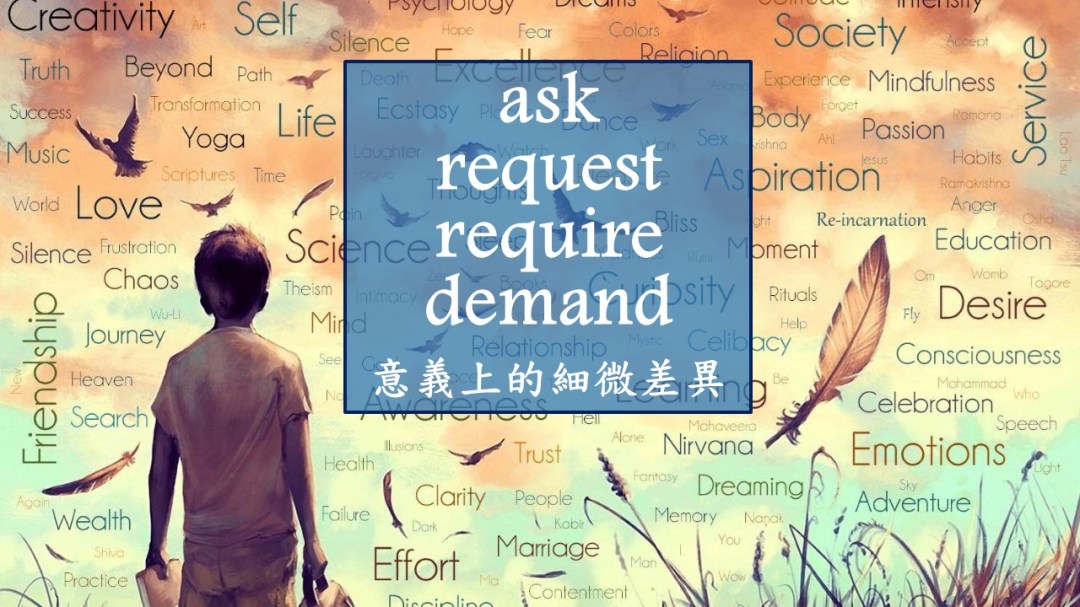
ask, request, require, demand都一樣嗎!

這四個動詞都有「要求、請求、需要」的意義,但內涵及用法並不相同。

  • ask最常見,初學者用ask表達「問問題」,例如May I ask a question? 所以ask是為了完成某事而口頭(或書面)提出請求,甚至有「拜託」的意思,例如:
    (1) I asked for help. (我請求協助)
    (2) I asked my classmates to help me. (我請求我的同學幫我)
    (3) Father asked that we stay at home at night. (爸爸要求我們晚上待在家。)

  • request通常是有權提出的(正式)請求,當有人對我們說It is my request. 代表那個人對我們提出有道理的要求。例句:
    (1) The villagers requested assistance. (那些村民請求幫助)
    (2) We requested the local government to return our land. (我們要求政府歸還土地)
    (3) They requested that the meeting be held next Friday. (他們要求會議下周五舉辦)

如果將句子改成They asked that the meeting beheld next Friday.意思上有請求或拜託的意思。

  • require是指根據法律、規定提出要求,意為「依照規定…」,常用在被動語氣。例句:
    (1) Students require more help in the first term. (學生在第一學期需要較多協助)
    (2) We had better do things that are required by law. (我們最好已依法完成一切)
    (3) The rules require that you bring one guest to the meeting. (按照規定,你要帶一位來賓出席會議)

  • demand是「(強烈)要求」的意思,所以常用We have a demanding teacher.來描述要求很多的老師。例句:
    (1) I demand my rights. (我要求應有權利)
    (2) The police demanded our name and address. (警方要求我們提供姓名住址)。
    (3) The library demanded that he return the books he borrowed in a week. (她要求他把從她那裡借走的書還回來。)

這四個動詞的受詞都可用that +名詞子句表達「急迫性語氣」,只是強度不同。

  1. The students asked that they (should) be allowed to use a calculator. (學生要求被允許用計算機)。句中的should可以省略,但動詞仍是原形be allowed。
  2. Teachers requested that the government halt the plan. (老師要求政府停止該計畫)
  3. The manager required that the machines work all night. (廠長要求機器整晚運作)
  4. The boss demanded that we finish the work in 2 days. (老板要求我們兩天內完成)

無論您是(1)注重口說寫作的國高中生; (2)提升競爭力的英文老師; (3)努力成為各科雙語老師; 或(4)提升專業英語說寫能力的碩博生或社會人士。請洽客製化訓練課程詢問專線

唯一雲端虛擬教室,將想法全文輸入輸出訓練🎯,雲端專人訂正提供改善建議。
影片線上教學平台:Youtube教學頻道
提升國際競爭力 加入超凡遠距 

副詞位置的文法

英文文法沒那麼複雜

英文句型只有一個SVOPA:主詞+動詞+受詞+ (介係詞片語) +副詞

首先要了解副詞功能,副詞用以修飾動詞或形容詞,例如
May drives carefully.這句子的carefully是副詞,用以修飾動詞drive。
She is a careful driver.這句子的careful是形容詞,用以修飾名詞driver。

呈現副詞型的文法有哪些?如何正確的擺放文字在句子的副詞位置呢?

1. 副詞:動作發生的時間、地點、程度等等,通常有兩種類型,
(1) 形容詞+ly,例如easily,但部分例外,例如well,而不是goodly,或fast而不是fastly…等等的一些少數特殊變化, 例如
Jane runs fast but I ran slowly. May did well, but Tom did badly.
(2) 時間或地方副詞,yesterday, last week, there, before, home…等等。例如
We went shopping at the mall yesterday. We never went there before.

2. 副詞子句:某些副詞有連接兩個句子功能的,例如if, when, because…等,那麼這些副詞後的句子稱為副詞子句。例如
He always does well on exams because he studies very hard.

3. 分詞構句:也可以稱為副詞片語,也就是將副詞子句簡化成副詞片語,其簡化的方式與形容詞片語相同,稱為分詞化。
(1) Because Tim studied hard, he finally entered his dream university. 副詞子句
= Studying hard, Tim finally entered his dream university. 分詞構句
(2) If I am invited, I will attend the meeting.
= If invited, I will attend the meeting.

動詞位置文法的形成

英文文法沒那麼複雜

英文句型只有一個SVOPA:主詞+動詞+受詞+ (介係詞片語) +副詞。
文法就是將組合成句子的單字,以正確的詞性放入該結構中。關鍵在詞性,這幾乎就是正確文法的關鍵。形成句子的五個元素的跟詞類的關係就是:
結構:主詞+動詞+受詞+ (介係詞片語) +副詞
詞性:名詞+動詞+名詞+ (介係詞+名詞) +副詞

也就是一個句子中會有可能有一個動詞元素,其他動詞元素則出現在子句中或轉變成其他詞類(如例句中的speaking是動詞轉變成名詞)。例如:
Tom practices speaking English by himself every day.

正確呈現動詞型的文法有哪些?

1. 動詞時態:每個動詞有四個形,以do為例的四個型分別為(do/ did/ doing/ done),中文名稱為(原型/過去型/現在分詞/過去分詞)。依據所表達的涵義可能會出現12種變化。以do為例:
(1) …do housework every day (每天做)
(2) …did … (昨天做)
(3) …will do … (明天將會做)
(4) …is doing … (正在做)
(5) …was doing … (當時正在做)
(6) …will be doing … (將會正在做)
(7) …have done … (已經做)
(8) …had done … (那時之前已經做)
(9) …will have done … (將已經做)
(10) …have been doing for 1 hour… (已經做一小時)
(11) …had been doing for 1 hour … (那時就已經做一小時)
(12) …will have been doing for 1 hour … (將已經做一小時)

2. 被動語態 (be + V-en):當主詞沒有表現動詞的動作即為被動語氣。
(1) 被動:Housework was done by me yesterday. 主動:I did housework yesterday.
(2) 被動:The temple was built 100 years ago. 主動:通常沒有,因為沒有適當主詞可用。

3. 情緒助動詞:這類助動詞的含意會因時間表達不同而有微妙轉變。
「我應該多運動」及「我那時候應該多運動」,雖然都是「應該」,但含意不同。「我那時候應該多運動」多了「該做卻沒有做」的情緒。例如
(1) I should do more exercise. 我應該多運動。
(2) I should have done more exercise last year. 我去年應該多運動(但是我沒有)。
(3) Amy could be sick. She is running in rain now. Amy可能會生病,她現在在雨中跑步。
(4) Amy could have been sick yesterday. She didn’t come to office. Amy昨天可能是生病了,她沒來上班。

4. 假設語氣 (跟現在事實相反):由於不是已經發生的事實,所以動詞使用特殊時態,來表達跟真正事實不同。例如
(1) I wish I were a fish. If I were a fish, I could go anywhere freely.
翻譯:我希望我是條魚,如果我是條魚,我就能自由自在去任何地方。
事實:I am not a fish. I cannot go anywhere freely. (描述事實用正常時態。)
(2) I wish I didn’t have a job. If I didn’t have a job, I would feel happy.
翻譯:我希望我沒有工作,如果我沒有工作,我將會感到快樂。
事實:I have a job. I don’t feel happy. (描述事實用正常時態。)

5. 假設語氣 (跟過去事實相反):跟前方假設語氣 (跟現在事實相反)動詞變化不同。
(1) I wish I hadn’t wasted time playing video games.
翻譯:我希望我以前沒有浪費時間打電動。
事實:I wasted time playing video games. 我以前浪費許多時間打電動。
(2) If I hadn’t wasted a lot of time, I could have entered NTU.
翻譯:如果我以前沒有浪費許多時間,我就可能已經就讀台大。
事實:I wasted a lot of time. I didn’t enter NTU.

6. 倒裝句:當否定含意副詞擺在句首加強語氣,就要用倒裝句。形成倒裝句的方法就是類似疑問句一樣地找出助動詞,例如
(1) I never study at the library.
倒裝句:Never do I study at the library. 像否定句一樣要使用助動詞。
(2) Amy knows little about sports.
倒裝句:Little does Amy know about sports.

7. 急迫性語氣:使用ask, insist, suggest, demand…等有急迫要求語氣的動詞時,用名詞子句表達求助的內容,子句中的動詞不必賦予時態,因為只是表達想法,尚未真實發生。例如
(1) I insisted that my brother not use my cellphone. 子句中的動詞是not use
(2) Jane’s father asked that Jane go mountain climbing with a guide. 子句中的動詞是go

怎樣才算是學會了文法?能自由自在造句才是真正學會文法。全文輸入輸出訓練能幫學習者達成這個目的,概念就是英語是技術,少量解說大量實作,讓所學應用於實用中,不出門就能成為世界語高手。

名詞位置文法的形成

英文文法沒那麼複雜

英文句型只有一個SVOPA:主詞+動詞+受詞+ (介係詞片語) +副詞。
文法就是將組合成句子的單字,以正確的詞性放入該結構中。關鍵在詞性,這幾乎就是正確文法的關鍵。形成句子的五個元素的跟詞類的關係就是:

結構:主詞+動詞+受詞+ (介係詞片語) +副詞
詞性:名詞+動詞+名詞+ (介係詞+名詞) +副詞

也就是一個句子中會有可能有三個名詞元素。例如:
Tom practices speaking English by himself every day.

正確呈現名詞型的文法有哪些?

1. 人稱代名詞:每個人稱有五個變化,以I為例I/ my/ me/ mine/myself。
中文名稱:主格/所有格/受格/所有格代名詞/反身代名詞)。例如
I like you. You like me. I like my friend and I don’t like yours. My friend likes me. I like myself. I study for myself.

2. 動名詞V-ing:把動詞當作名詞的方式doing。這時的V-ing通常表達習慣做的事。例如
*Being a teacher makes me happy.
*I enjoy teaching people.

3. 不定詞to V:另一個把動作當作名詞的方式 to do。這時的to V通常表達要去做的事。例如
*I want to play basketball. To play basketball is OK with me.

4. 名詞子句 I/ 名詞子句 II一個句子也可當作名詞,句子裡面的句子稱為子句。
下面例句中的主詞及受詞就是名詞子句,名詞子句也可能是其他when, where, who…或whether開頭的子句。例如
*No one knows where the ship went.
*Where the ship went is a mystery.
*We just talked about how May did it.

4. 假主詞/假受詞 It可以用來代替一個句子,稱為假主詞或假受詞。例如
*It is important that everyone comes to class on time. It為假主詞
It = That everyone comes to class on time
*We find it hard to climb the mountain. It為假受詞
it = to climb the mountain

5. 同位語:名詞子句可以代替一個事實或說法,這個名詞子句稱為同位語。例如
*It is a fact that the Earth moves around the Sun.
fact = the Earth moves around the Sun
*People have the belief that nuclear weapons are immoral.
belief = nuclear weapons are immoral

6. 分詞形容詞名詞常需要形容詞修飾,除了一般形容詞,分詞形容詞是重要文法觀念,每個動詞有兩個分詞型,現在分詞V-ing及過去分詞V-en,這兩個型可以變成兩個形容詞。例如動詞bore可以變成兩個形容詞。
*The book bores me a lot.。
The book is boring. V-ing 修飾主詞為主動含意。
I am bored. V-en 修飾受詞為被動含意。
理論上每個動詞都可以用這樣的變化變成兩個形容詞,例如
exciting/excited 或 interesting/interested

7. 形容詞子句 (I) / 形容詞子句 (II)用一個句子當作形容詞就是形容詞子句,放在該子句修飾的名詞後方,例如下方兩個例句中,劃底線的部分為形容詞子句。例如
*We thanked the girl who showed us the way to the park.
我們感謝那位跟我們說去公園的路的女孩。
*We are talking about the movie that we went to last night.
我們正在談論那一部我們昨晚去看的電影。

8. 形容詞片語形容詞子句常簡化成片語,簡化方式分詞化。例如
*We thanked the girl who showed us the way to the park.
= We thanked the girl showing us the way to the park.
*Jean owns a house which has beautiful ocean views.
= Jean owns a house having beautiful ocean views.

以上所有文法項目的解說都是說明概念,細節請觀看單項教學影片。

怎樣才算是學會了文法?能自由自在造句才是真正學會文法。全文輸入輸出訓練能幫學習者達成這個目的,概念就是英語是技術,少量解說大量實作,讓所學應用於實用中,不出門就能成為世界語高手。

國一Judy演講稿的形成

中文原稿:演講者先以中文撰寫演講稿。

長大

大人們常常會說:「你長大了,你變得懂事了」,但是,你知道什麼是真正的長大嗎?長大不是你到了某個年紀,就叫長大,我覺得長大就是在你經歷了某件事之後的某個瞬間,你會覺得所有事情都不一樣了,而那個瞬間只有自己會懂。在那個瞬間,你會發現你必須學會獨立,必須學會控制自己的情緒,必須變得成熟,不能在像以前的自己一樣,想怎樣就怎樣的哭鬧。

講個例子,有一天在我要去學校之前,我覺得那個心態變得跟之前不一樣了,不在跟以前一樣,去了學校就開始聊天,而是變得異常安靜,我的朋友們都來問我怎麼了,但是,說真的我也不知道我怎麼了,我就是突然不想講話,只想坐在那安靜的看書,腦中突然就浮現幾句話「你要認真」,「你要成熟」隨著這幾句話的出現,我就知道,我終於長大了

中文修正稿
將文章的每個句子組織成(主詞+動詞+受詞/補助詞+介係詞片語+複詞)結構。

長大

大人們常常會說:「等你長大了,你就知道很多真理,就變成熟了。」
但是,我對長大有不同的看法。

甚麼是真正的長大呢?並不是你到了某個年紀,你就長大了。長大只是某一個瞬間,那是當你經歷了某件事的瞬間。當那個瞬間來臨,你會覺得所有事情都不一樣了,而那個瞬間只有自己會懂。在那個瞬間之後,你會發現你必須學會獨立,必須學會控制自己的情緒,你必須變得成熟,你不能在像以前一樣,想怎樣就怎樣或像小孩子一樣哭鬧。我有過那個瞬間。

有一天在我要去學校之前,我覺得我的心變得跟以前不一樣了,那一天,我到了學校不再跟以前一樣開始跟同學聊天。對我而言,那一天變得非常安靜,我只坐著看書,我對自己說「你要用功努力,你要成熟。」當這幾句話的出現,我知道我終於長大成熟了。

那一天我的朋友們來問我怎麼了,但是,我只是微笑說,沒事啊!我突然不像以前一樣多話,我只是知道那是新的一天,那是新的我。

中文翻譯英文原稿:根據中文修正稿的結構翻譯成英文演講稿。

Growing Up!

It doesn’t take a long time to grow up! Adults often say, “When you grow up, you will know a lot of truths and become mature."

However, I have a different view of growing up. What really is growing up? It’s not that you grow up when you reach a certain age. Growing up is just a moment. That is the moment when you experience something. When that moment comes, you will feel that everything is different. And only you will understand that moment. After that moment, you will find that you must learn to be independent,you must learn to control your emotions, you must become mature, you can’t do whatever you want or cry like a child like before. 

I have had that moment. One day before I was going went to school, I felt that my heart mind became different from before.That day, when I arrived at school, I stopped chatting with my classmates as before. For me, that day became very quiet.I just sat reading. I said to myself, “You have to work hard, you have to be mature."When these few words appeared, I knew that I had finally grown up and become mature. My friends came to ask me what was wrong that day, but I just smiled and said, “I am OK! Suddenly I am not as talkative as before.

I just know that it is a new day. That is the new me now.

中文翻譯英文修正稿:需要修正的地方很少。

Growing Up!

It doesn’t take a long time to grow up!Adults often say, “When you grow up, you will know a lot of truths and become mature."

However, I have a different view of growing up. What really is growing up? It’s not that you grow up when you reach a certain age. Growing up is just a moment. That is the moment when you experience something. When that moment comes, you will feel that everything is different. And only you understand that moment. After that moment, you will find that you must learn to be independent, you must learn to control your emotions, you must become mature, you can’t do whatever you want or cry like a child like before. I have had that moment.

One day before I went to school, I felt that my mind became different from before.
That day, when I arrived at school, I stopped chatting with my classmates as before. 
For me, that day became very quiet.I just sat reading. I said to myself, “You have to work hard, you have to be mature." When these few words appeared, I knew that I had finally grown up and become mature. My friends came to ask me what was wrong that day, but I just smiled and said, “I am OK! Suddenly I am not as talkative as before.

I just know that it is a new day. That is the new me now.

這樣的演講稿幾乎都是學員自行發想及撰稿,不必死背也記得內容,忘記原講稿內容也沒關係,因為已經具備英文句子的結構概念,也有足夠的造句能力自行造句。

學員準備要站上演講台演講中。

初級文法 2

初級文法書2 PDF

教學影片

Unit 1 現在完成式

Unit 2 現在完成進行式

Unit 3 過去完成式

Unit 4 過去完成進行式

Unit 5 名詞子句 II

Unit 6 形容詞子句 II

Unit 7 被動式

Unit 8 形容詞片語

Unit 9 連接詞

Unit 10 副詞子句

Unit 11 分詞形容詞

Unit 12 分詞構句

習作答案