本測驗資料來源為大學入學考試中心英語聽力示例5,可自行下載試卷。或在本頁面進行測驗,答案在頁面最底端。


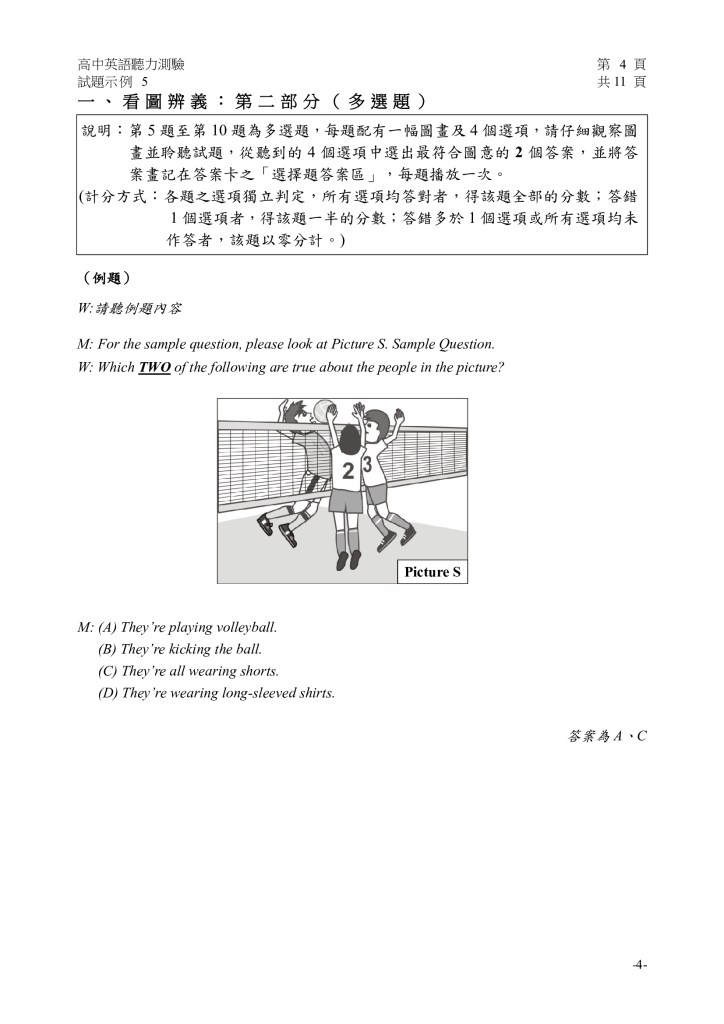




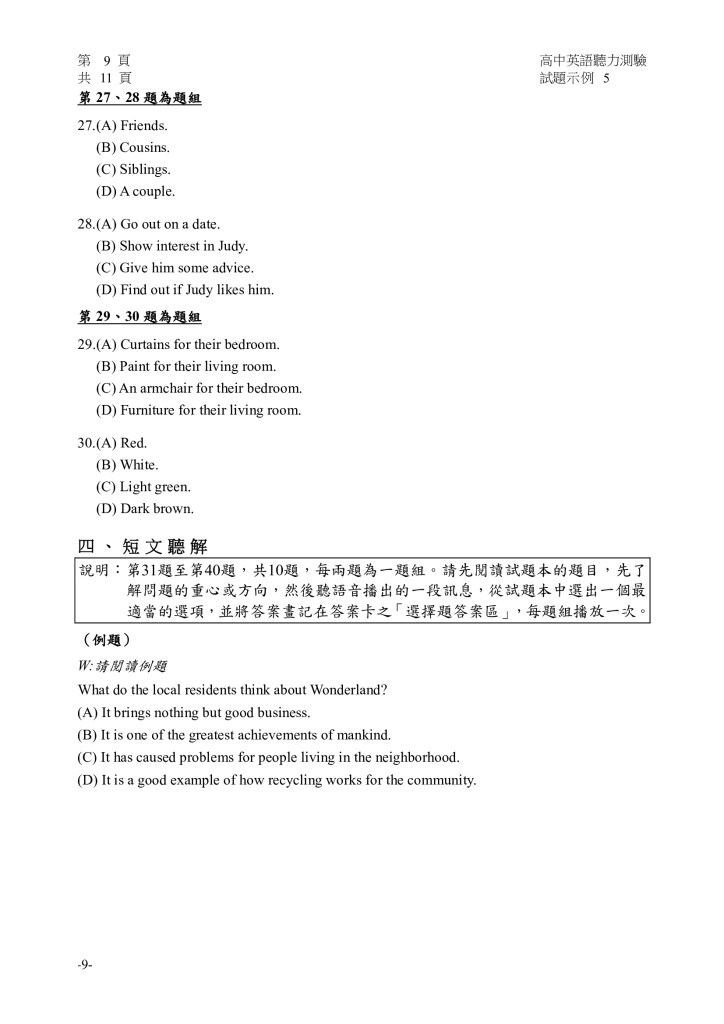
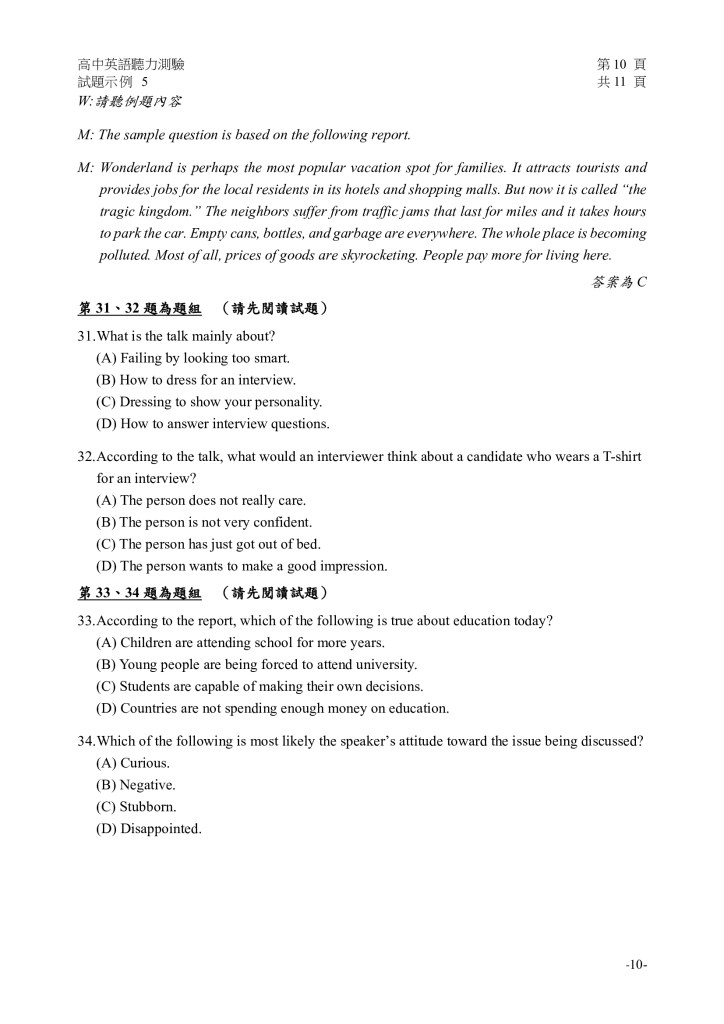

大學聯考英語聽力模擬題5答案。
要真正提升英語能力必須要聽說讀寫並進,才能擴大背景知識,迅速掌握文意,超凡遠距全文輸入輸出訓練課程幫您同時提升英語聽說讀寫的能力。
本測驗資料來源為大學入學考試中心英語聽力示例5,可自行下載試卷。或在本頁面進行測驗,答案在頁面最底端。
大學聯考英語聽力模擬題5答案。
要真正提升英語能力必須要聽說讀寫並進,才能擴大背景知識,迅速掌握文意,超凡遠距全文輸入輸出訓練課程幫您同時提升英語聽說讀寫的能力。

英文句子的基本架構為SVOPA (主詞/動詞/受詞/介系詞片語/副詞),介係詞片語就是(介係詞+名詞)例如I put the ball on the desk (我放那顆球在書桌上),on the desk就是介系詞片語(請參考基本造句結構概念)。若是對於介係詞應用已經相當具有概念,想要從實際應用中建立語感,可以進行全文輸入輸出訓練。
英文的介系詞使用常使得學習者困惑。其實每個介係詞有簡單的基本定義,我們要從基本定義出發去「感覺」甚麼場合用甚麼介系詞,介係詞不是「文法」問題,是「表達含意」的問題,不能背規則,要感覺自己想表達甚麼。
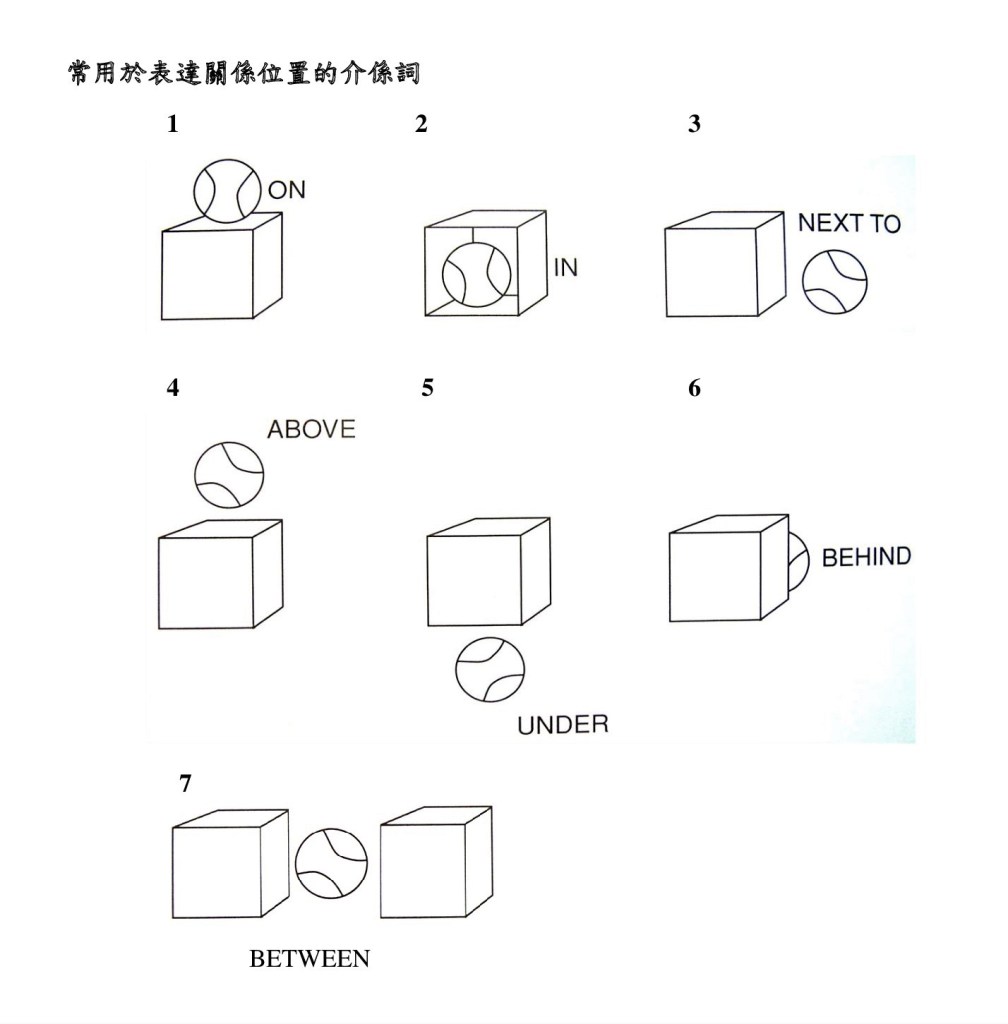
更多用於表達關係位置的介係詞

實例

實例
如何感覺要用甚麼介係詞呢?例如,在車上是「in a bus」還是「on a bus」?介係詞in的基本定義是「在裡面」,如果你要表達「在車上有24個座位」就用in,There are 24 seats in the bus. in是一個空間裡的感覺。如果是在車上看到外面美麗風景就用on,It is a comfortable ride with beautiful views on the bus. on是在最上方,上方沒有阻擋的感覺,從這個概念延伸。
我們用in的基本觀念來延伸其含義,in是在一個大空間範圍裡面,所以這裡面的一個方向也用in,例如I have interest in science. (我對科學這一方面有興趣),on是在由上方壓下來的力量,例如Climate has a big effect on buildings. (天氣對建築物有很大影響)。而against原本是「緊靠著」,也就是兩方的力量互相抵銷,進而延伸出「反對」的意思,Tom said something against me. (Tom說了些反對我的話。)
介係詞的延伸運用
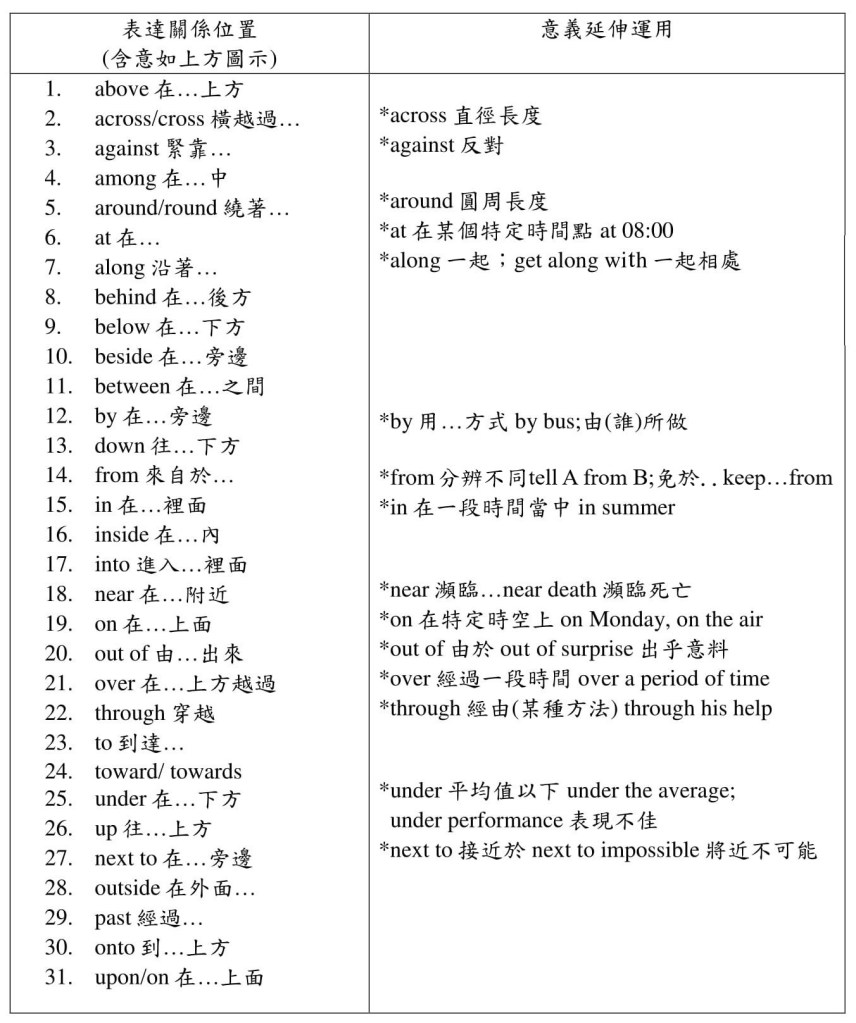
所以介係詞的選擇並不是只有一個標準答案,可能因表達不同而有兩三種選項,重點是你要表達甚麼,We walked through the park. We walked around the park. We walked over the park. We walked under the park. 這些句子因為不同的介係詞而有不同的含意。
想要大量英語全文說寫進行遠距訓練,可以參考唯一進行全文輸入輸出訓練課程。

7-1 This/That/These/Those 這個/那個/這些/那些
當學習者學會用人稱代名詞I/You/He/She/They造基本的句子之後,接著就要用非人稱代名詞來造句,也就是this, that / these, those 這個,那個 / 這些,那些,還有最常使用的倒裝句型There is/There are。

7-2 There is/ There are基本倒裝句
中文也有倒裝句,當我們想表達「你的書在那裏」但我們可能說成「那裏是你的書」,這就是倒裝句,也就是不先講主詞,卻先講地方副詞。英文也是一樣。
例如:A book is there on the desk. There is a book on the desk.
說明:
7-2 冠詞 a/ an/ the 應用的基本觀念:

助動詞就是「幫助」動詞的詞,所以有助動詞就一定會有動詞跟在後面,大多數情形下,助動詞後面緊跟著動詞原型。情緒助動詞也是助動詞,會有情緒這兩個字是因為這些助動詞本身具有意義,而不是像do/did等不具意義的助動詞,請看下面以can做為助動詞的例句:
所有情緒助動詞及含意:請參考下方表格並閱讀例句。
| 助動詞 | 意義 | 舉例 |
| can1 | 有能力做… | She can sing. 她能唱歌。 |
| can2 | 能夠;能力足以… | That can help. 這可能有幫助。 |
| could1 | 以前能夠… | He could swim before. 他以前會游泳。 |
| could2 | 可能 (50%可能性) | That could happen soon. 這可能很快發生。 |
| may1 | 應該; 可以 | May I stay here? 我應該留下來嗎? |
| may2 | 可能 | That may be a problem. 這可能是個問題。 |
| might | 可能 | The weather might get better. 天氣應該會變好。 |
| must1 | 必須要 | Sam must go to school. Sam必須要去學校了。 |
| must2 | 必定是 | It must be hot outside. 外面必定很熱。 |
| shall | 將會 | I shall not pass the test. 我將不會考及格。 |
| should | 應該 | You should stop your car. 你應該停車。 |
| ought to | 應該 | You ought to give up smoking. 你應該戒煙。 |
| will | 將會 | She will try it again. 她將會再試一次。 |
| would | 願意 | I would like to help the poor kids. 我願意幫那些窮孩子。 |
大量英語全文說寫遠距訓練:全文輸入輸出訓練
影片線上教學平台:Youtube教學頻道
提升國際競爭力 加入超凡遠距 。

每個台灣小孩都必須學習英文,但多數不會就讀外文系,也不會出國留學,可是這些台灣孩子當然也希望有好的英語能力,畢竟英語是世界語,無論在生活或職場都有其便利性及重要性。一年半前我開始了「帶學英文的孩子到演講台」的計畫,目的是讓台灣孩子體會到即使他們不就讀外文系,也不出國留學,也能將英語提升到具有競爭力的程度。我用我自己做例子,於是也開始英語演講,面對自己人演講壓力不夠大,表現不夠好,於是也開始對外演講,但沒有知名度的我能去哪裡演講?幸運地知道了KTC高雄英語演講協會,於是加入成為會員,也開始在KTC安排下能規律的演講。
並不是沒有英語應用的環境就學不好語言,而是要創造環境。只要平時有正確規律的訓練(參考超凡遠距全文輸入輸出訓練),所有人都能將英語提升到相當不錯的程度,讓英語成為具有競爭力的工具。
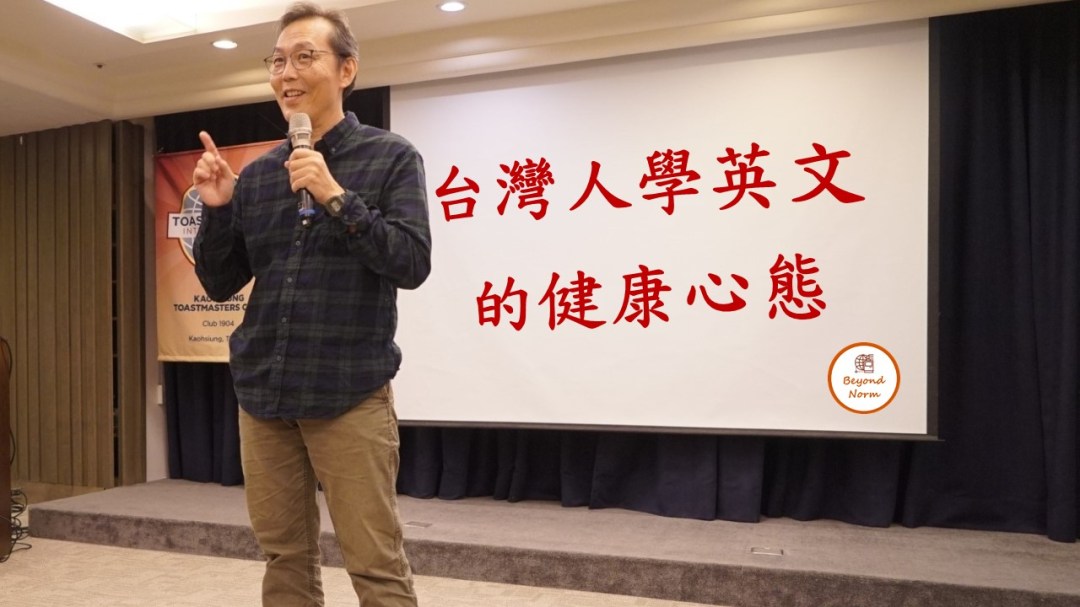
(1)要有自信; (2)要像是學騎腳踏車一樣; (3) 別忘記自己是台灣人,不必當外國人!
大多數學英語台灣人的我們都不會就讀外文系,也不會出國留學,但是我們想學好英語,因為要提升競爭力。英語是工具、是技術,因此學習的效率及效果非常重要,超凡遠距創辦人李其興Paul Lee在屏東鄉下長大,不曾出國留學,多年來從事建築業,但現在全心投入發展全文輸入輸出訓練,幫助台灣學習英語的孩子,因為有著2030雙語國家的願景,我們到時要成為做好準備的那一群。
全文輸入輸出訓練是以說寫輸出為目的的訓練課程,有興趣的朋友請造訪全文輸入輸出訓練。

應用單字
To know what you are, first let’s define “ideas,” “events,” and “people.”
Discussing people here means to talk about a person, usually in a negative, sarcastic way. Discussing events means to talk about what happen in our life and how those things cause problems to us. Discussing ideas means to find out what is behind an event, for example, the cause or solutions to the problems. Don’t be the small minds!
Unfortunately we are surrounded by them in our life. They follow celebrity gossip, start office politics, and backstab and criticize others. Online, they shame or attack each other. In real life, they make comparisons and complaints about this and that. They are happy with others’ failures. Small minds are judgmental, get offended easily and tend to reiterate what has already happened. They are good at identifying others’ mistake, blaming others, yet they have no solution. Small minds discuss something that seems interesting, but detrimental to their relationship with others and family. Average minds look beyond people and focus on events. They identity facts, start conversation, and provide opinion based on the facts.
Yet it is a fallacy that just discussing events makes people smart. It probably does, but we can be smarter if we offer solutions to the problems. Great minds find solutions to problems, even if the problems don’t seem to relate to them. Stay average, but try to move closer to the great. Stay average, but prevent yourself from being the small.

點此連結了解如何進行全文輸入輸出訓練!
We can change the words we use to change our mindset. No matter whether we talk to others or to ourselves. Mindset is how you see the world and how you see yourself in the world. With a negative mindset, our life seems difficult, small setbacks feel like failures, new situations feel daunting, and trying feels hopeless. With a positive mindset, mistakes are what we learn from, something new is an exciting challenge, hard work brings results, and our world is a great place.
Changing your mindset can be simple. You just need to change the words you use. Your choice of words is an important way to create a happy world around you. You can help your children, students, and friends to develop a positive mindset. You just need to change the words you say to them and help them to change the words that they say. Here are some examples of how to turn around words: ‘It is too hard’ becomes ‘It may take some time and effort.’ ‘You made a mistake’ becomes ‘Hey, mistakes help you improve.’ This creates a 180 degree turn around from a negative, hopeless feeling to a positive, forward-looking view.
Words are powerful and our brains believe what we hear. The right words spoken in the right way can bring us love, money and respect, while the wrong words—or even the right words spoken in the wrong way — can lead people to argument, distrust, or hatred. We must carefully orchestrate our speech if we want to achieve our goals and bring our dreams to fruition.” Help your children, family, people around you and yourself to hear the right words that are going to create your happy world.
Every word matters.
我們可以改變我們說的話來改變我們的思維模式,無論我們是對他人說話或是對自己,思維模式就是你如何看這個世界及如何看在這世界的自己。帶著負面思維模式,我們會覺得人生很難,小小挫折就像是大大失敗,新的處境令人感到氣餒,任何嘗試都是無望的。帶著正面思維模式,錯誤可讓我們從中學習,覺得新事務是很棒的挑戰,覺得辛苦會帶來成果,我們的世界很美好。
要改變你的思維模式很簡單,只需要改變你說話時所使用的字,選擇你說話時所用的字是很重要的,選擇用字可以在你周邊創造快樂環境,你可以幫助你的孩子、學生、或朋友
發展正面思維模式。你只需要改變你說話的方式以及幫助他們改變他們說話的方式,這裡有幾個如何轉變用字的例子,「這太難了!」 轉變成 「這可能需要一些時間及努力」,「你錯了!」 轉變成 「錯誤有助於你改善」,這樣能創造180度的轉變,從一種負面的、無望的感受轉變成正面的、前瞻性的看法。
文字是很有力量的,而我們的大腦相信我們聽到的字,對的話語用正確的方式表達能帶給我們愛、金錢以及尊敬,然而不對的話語,或甚至是對的話語用不正確的方式表達,會帶給當事人爭論、不信任、及仇恨,我們必須警慎細心策畫演說,如果我們想要,達成目標以及讓夢想實現,幫助你的孩子、家庭、身邊的人、還有自己,讓大家都能聽到正確的話語,創造你的快樂世界。
每個字都很重要!

重要單字片語
(1) 國中超前佈署800字
(2) 高一必記600單字
(3) 升大學最重要單字
易混淆單字片語:spend/cost/take等令人困惑的單字。
重要句型及表達
(1) 容易混淆的副詞:hard/hardly; near/nearly…
(2) That做為關係代名詞(✖which)的狀況
表達升級
(1) 好字好句:好用簡單的用字,讓你的表達立即升級。
(2) 好用句型:好用、常用的句型或片語。
(3) 英文搭配字:all or nothing… 等立即升級口說及寫作。
特定場合英文
(1) 旅行時用到的英文
有關單字這個單元除了有個學習階段必記單字,還有不同用途的單字,例如造句時的搭配字、或口說及寫作用到的轉折詞(構建中)等等,請多加下載或瀏覽運用。然而真正要運用單字請加入超凡遠距全文輸入輸出訓練。
 超凡遠距知識英語
