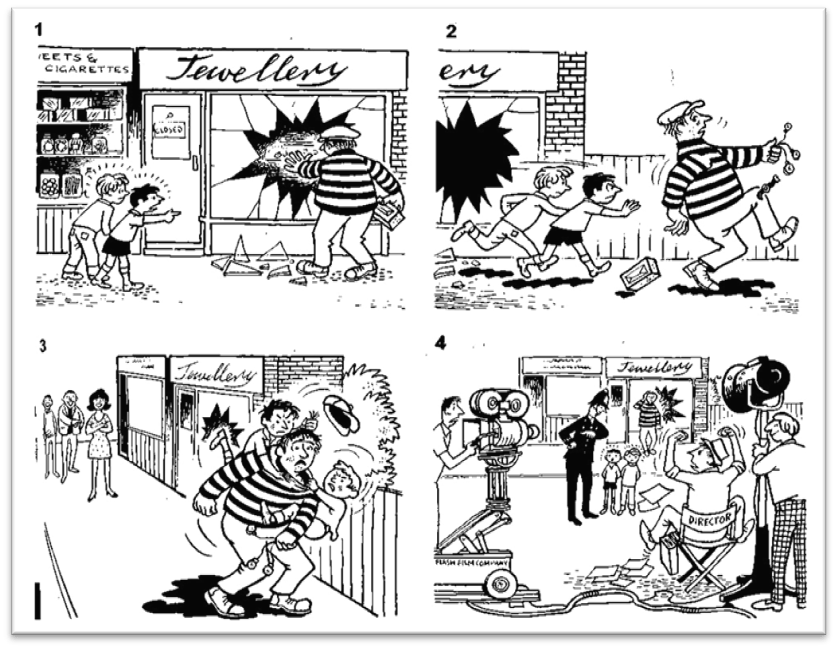
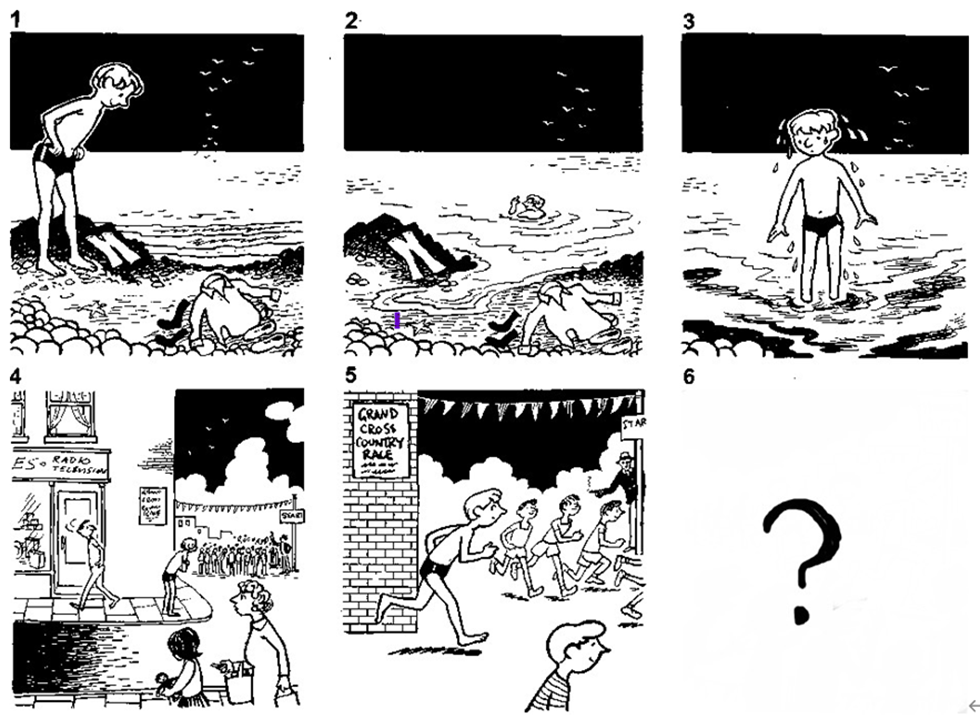
第一段重點:清楚標示主題論述;重在「事件本身」,不必提出太多事件。 個人經驗描述,清楚標示主題論述(作者立場),由於第一段就要描述個人經歷,所以主題論述可以先出現。主題論述(Thesis Statement) 範例:Although student life is full of happy memories, an unpleasant experience I once had taught me an important life lesson. 說清楚:我有過不愉快的經驗,而且這個經驗「有意義、有啟發」。 描述經驗重點,提供2–3個具體細節。例如: (1) 發生在什麼時候?(某次考試、某段時間) (2) 發生了什麼事?(被誤解/被霸凌/考試失敗/朋友決裂等) (3) 當下的感受是什麼?(失望、難過、憤怒、無助)
第一段:個人學習經驗及主題論述 (1) 描述個人層面的衝擊,例如: 學習方式的改變(線上課程、錄影回放、線上討論) 學習體驗的改變(更彈性/較缺乏互動/需要更自律) 描述個人感受(方便但具挑戰性)+ 主題論述 參考:As a student, the rise of online learning has significantly changed the way I study and experience education. 本段重點:從「學生」角度出發描述改變,不急著評價對錯
請以 How has technology changed my life? 為主題,寫一篇至少120個字的英文作文。 第一段針對文章主題,說明科技對人類的影響及好壞處,第二段描述某一種科技如何改變你的生活,及個人的評估是好改變還是壞改變。
參考架構:
第一段:科技對人類的影響+主題論述(Thesis Statement 作者立場)
科技對人類的影響 (1) 科技讓生活更便利(溝通、學習、娛樂) (2) 同時也帶來問題(依賴、分心、隱私) (3) 科技影響人類的生活方式與思考模式 (4) 主題論述參考:Technology has greatly changed human life by bringing convenience, but it also creates new challenges.
主題論述參考:A world without the Internet would be very different from the one we live in today. Although life might be slower, such a world could be both better and worse.
背景與關聯說明 (1) 廣告隨處可見(電視、網路、街道) (2) 人們透過廣告接觸商品與服務 (3) 廣告影響我們的消費選擇與生活方式 (4) 主題論述參考:Although advertising is often criticized, it plays an important role in our daily lives.
Discussion Questions Answers from different perspectivesfor reference
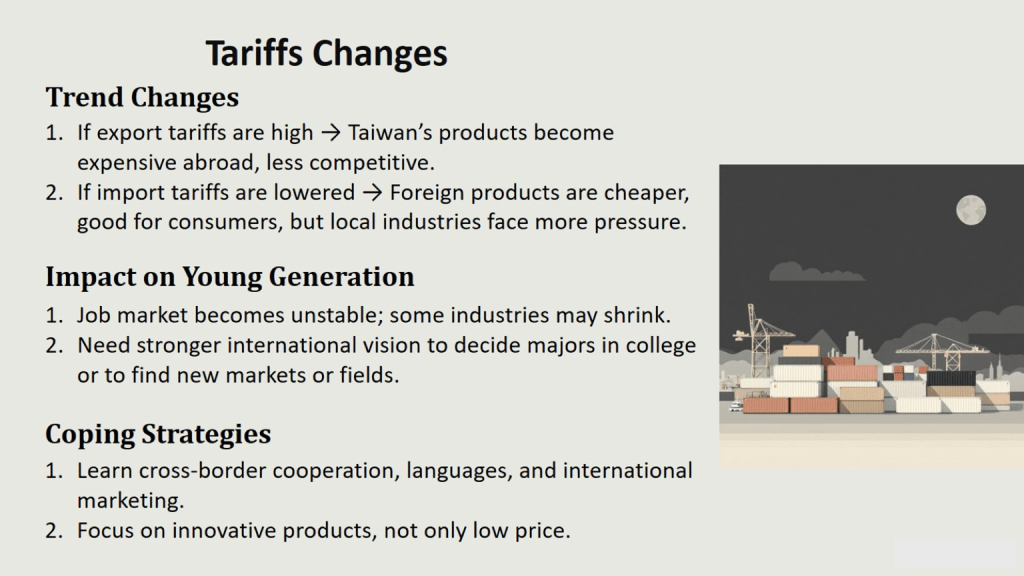
Tariffs (關稅)
Q1. If Taiwan’s exports face higher tariffs and become more expensive abroad, which industries or jobs do you think will be most affected? Perspective: Optimistic Innovator Even if tariffs rise, I think Taiwan can adapt by focusing on innovation instead of price. For example, chips from TSMC are so advanced that buyers may still need them, no matter the cost. Tariffs might push local companies to upgrade technology faster and create niche products that other countries cannot easily replace. Of course, some industries like agriculture may suffer, but this challenge could encourage farmers to build strong brands or find new regional markets. For me, I see tariffs as tough but also a chance for creativity.
Q2. Would you prefer to work for a company that serves mainly the local market, or one that relies on exports? Why?ompanies… Perspective: Practical Risk Manager If I think about my own career, I would probably choose a company that mainly serves the local market. Export companies face too many risks: tariffs, currency changes, and global politics. Local-focused companies, like those in healthcare, food, or services, are more stable because people always need them. Of course, the salary may be smaller compared to international companies, but stability is more important for me. If I can build my skills in a safe environment, maybe later I can consider working in an international firm.
Currency Value (幣值)
Q3. If the Taiwan dollar becomes stronger, what changes would you notice in your daily life (shopping, studying abroad, or traveling)? Perspective: Young Traveler If the Taiwan dollar becomes stronger, the first thing I would notice is traveling. Suddenly, flights, hotels, and even shopping abroad become cheaper. Studying overseas would also be easier, because tuition and rent cost less when converted into NTD. I think my daily life in Taiwan may not change much, but my opportunities to go abroad would definitely improve. For me, a stronger currency means more freedom to see the world and learn new things outside of Taiwan. That is very exciting for young people like me.
Q4.Do you think it is important for young Taiwanese to understand currency changes? How could this knowledge help in real life? Perspective: Skeptical Youth Honestly, I don’t think every young person needs to learn about currency. Most of us will not trade stocks or work in finance. As long as our salaries are stable and we can pay for daily expenses, exchange rates don’t matter much. If I travel abroad, I can just use an app to check the best time to exchange money. For me, understanding currency feels too technical and far away from my daily life. Instead of studying exchange rates, I’d rather focus on improving my work skills.
Domestic Issues (國內議題:政治與司法)
Q5. Do you think Taiwan is politically stable today? How might political stability (or instability) affect your future career? Perspective: Critical Observer I don’t think Taiwan is very politically stable. There are too many conflicts between parties, and sometimes the government spends more time fighting than solving problems. For young people, this makes the job market uncertain, because investors may not trust a country with constant political drama. Even if the economy is strong, instability in politics can ruin opportunities. For me, political stability is very important. If I feel the system is chaotic, I may even consider working abroad. I want to focus on my career, not on endless political news.
Q6. Can you think of a system in Taiwan that feels unfair? How do you think it affects society and young people? Perspective: Socially Concerned Student I think the education system in Taiwan is unfair. There is too much pressure on exams, and many students from poor families cannot afford expensive tutoring. This creates a big gap between rich and poor. For young people, it feels like your future depends not only on effort but also on family background. Some talented students give up because they feel the system is not fair. In the long run, this affects society because we lose potential talent and creativity. I think education should give more equal opportunities to everyone.
Economic Trends (經濟發展趨勢:AI、半導體等)
Q7. Are you worried that AI might replace your future job? Why or why not? Perspective: Tech Optimist I am not really worried about AI. Yes, it may take away some repetitive jobs, but it also creates new industries that never existed before. For example, who thought about AI ethics or AI trainers ten years ago? Also, AI can reduce boring tasks, so people can focus on creative or strategic work. For me, AI is like electricity in the past—it changes everything, but it also makes life better. If I keep learning, I can use AI as a tool to grow my career, not as a competitor.
Q8. Why do you think TSMC is building factories in the US? What challenges or concerns might it face there? Perspective: Strategic Thinker I think TSMC is building factories in the US mainly because of politics, not business. The US wants to reduce dependence on Taiwan, in case of conflict with China. But TSMC faces challenges: higher costs, fewer skilled engineers, and slower efficiency. For Taiwan, the concern is bigger—if too much technology moves abroad, Taiwan may lose its “silicon shield.” As a young person, this worries me, because Taiwan’s economy depends heavily on semiconductors. I hope TSMC can balance between keeping its most advanced technologies in Taiwan and satisfying US demands.
知識英語工作坊報告寫作架構
自訂標題:How Global Trends Shape My Daughters’ Future
1. 介紹 Introduction (around 50 words)
開頭語例子:The world is changing quickly, and Taiwan is deeply connected to these changes.
提示作者視角:Mention being a 64-year-old father with two daughters.
主題論述 (Thesis Statement):I think less about my own career and more about how these changes will shape their future opportunities.
2. 主體(1) Economic/Trade Trend (80–90 words)
重點:Tariffs and currency changes.
說明:Higher tariffs or a stronger Taiwan dollar make exports less competitive, reducing job opportunities in electronics, machinery, and agriculture.
連結主題論述:For my daughters, this means traditional career paths may not be reliable.
舉例或證明:They need flexibility and awareness of global trade and currency issues.
3. 主體(2) Technology Trend (around 100 words)
重點:AI and semiconductors.
說明:Taiwan’s strength in chips faces global competition and political pressures; AI is transforming jobs.
連結主題論述:Some jobs may disappear, but new ones will appear if they combine human skills with digital tools.
舉例或證明:my daughters should learn digital skills, improve English, and develop creativity, empathy, and cross-cultural communication.
4. Conclusion (around 100 words)
回到我的論述:Global trends are powerful forces that directly shape young people’s futures.
宏觀結束:For my daughters, these trends are both challenges and opportunities. With preparation, they can build meaningful and resilient careers.
範本:How Global Trends Shape My Daughters’ Future
(起頭帶讀者進入文境中)The world is changing quickly, and Taiwan is deeply connected to these changes. From tariffs and currency values to the rise of artificial intelligence, global trends affect not only industries but also the personal careers of young people. (主題論述帶讀者進入二三段主體) As a 64-year-old father with two daughters, aged 19 and 22, I think less about my own career and more about how these changes will shape their future opportunities.
主體(1) One important factor is trade and the economy. If Taiwan’s exports face higher tariffs or if the Taiwan dollar becomes too strong, our products may become less competitive in global markets. This could reduce job opportunities in key industries like electronics, machinery, and agriculture. For my daughters, this means they cannot simply rely on traditional career paths. They will need to be flexible, perhaps focusing on jobs connected to the local market or roles that require international cooperation. Understanding trade and currency issues will help them make better career choices.
主體(2) Another powerful trend is technology, especially AI and semiconductors. Taiwan is a global leader in chips, but the competition is intense, and the industry faces geopolitical pressures. At the same time, AI is transforming almost every field. While some jobs may disappear, new opportunities will appear for people who can combine human skills with digital tools. For my daughters, this means learning digital skills, improving their English, and developing abilities that AI cannot easily replace, such as creativity, empathy, and cross-cultural communication.
結論 In conclusion, global trends are not just distant headlines; they are powerful forces that will directly shape the lives of young Taiwanese people. For my daughters, these trends are both challenges and opportunities. If they prepare early, they will be able to build meaningful and resilient careers in a fast-changing world.
stormy (adj) 暴風雨的 The weather was stormy all night.整個晚上天氣都很暴風雨。
wide (adj) 寬的 The road is wide enough for two cars.這條路夠寬,可以並排兩輛車。
wrist (n) 手腕 She wore a bracelet on her wrist.她在手腕上戴了一條手鍊。
praise (v) 讚美 The teacher praised the student for his hard work.老師讚美了這位學生的努力。
beginner (n) 新手 He is a beginner at playing the guitar.他是彈吉他的初學者。
gentle (adj) 溫柔的 She has a gentle voice.她的聲音很溫柔。
dizzy (adj) 暈眩的 He felt dizzy after spinning in circles.他轉圈後感到頭暈。
entrance (n) 入口 The entrance to the building is on the left.建築物的入口在左邊。
dresser (n) 衣櫃 She put her clothes in the dresser.她把衣服放進了衣櫃。
cafeteria (n) 自助餐館 We ate lunch at the school cafeteria.我們在學校的自助餐廳吃了午餐。
current (adj) 現行的; (n) 水流;電流/ currently (adv) 當今 The current rule allows students to wear casual clothes.現行規則允許學生穿便服。 The river’s current is very strong.這條河的水流很強。 She is currently working on a new project.她當今正在做一個新專案。
rub (v) 磨擦 She rubbed her hands to keep warm.她摩擦雙手來取暖。
spread (v) 展開 He spread the blanket on the grass.他把毯子鋪在草地上。
broad (adj) 寬廣的 The street is broad and full of trees.這條街很寬,兩旁種滿了樹。
sneaky (adj) 鬼鬼祟祟的 He took a sneaky glance at the answers.他偷偷瞥了一眼答案。
role (n) 角色 She played the main role in the movie.她在電影中扮演了主角。
pollution (n) 污染; pollute (v) 污染 Air pollution is a big problem in the city.空氣污染是這個城市的一個大問題。 Factories pollute the river with waste.工廠用廢料污染河流。
honesty (n) 誠實 Honesty is an important value in our family.誠實是我們家庭的一個重要價值觀。
regret (v) 懊悔 He regretted not studying harder for the exam.他後悔沒有更努力準備考試。
style (n) 時尚;風格;文體 She has a unique fashion style.她有獨特的時尚風格。
Unit 8
foggy (adj) 有霧的 It was so foggy that I couldn’t see the road.霧太濃了,我看不清路。
service (n) 服務 The restaurant is known for its excellent service.這家餐廳以優質服務聞名。
tunnel (n) 隧道 We drove through a long tunnel.我們駛過了一條長隧道。
diamond (n) 鑽石 She wears a beautiful diamond ring.她戴著一枚漂亮的鑽石戒指。
biology (n) 生物學 He is studying biology at university.他在大學裡學習生物學。
interrupt (v) 打斷 (談話和工作等) Please don’t interrupt me when I’m speaking.當我說話時,請不要打斷我。
volleyball (n) 排球 We played volleyball on the beach.我們在海灘上打排球。
doughnut (n) = donut 甜甜圈 He bought a chocolate doughnut for breakfast.他買了一個巧克力甜甜圈當早餐。
tongue (n) 舌頭 She burned her tongue while drinking hot tea.她喝熱茶時燙到了舌頭。
final (adj) 最終的/ finally (adv)最後 The final exam is next week.最終考試在下週舉行。 We finally finished the project.我們終於完成了這個專案。
crayon (n) 蠟筆 The children drew pictures with crayons.孩子們用蠟筆畫圖。
steal (v) 偷竊 Someone tried to steal my bike.有人試圖偷我的自行車。
score (v)得分; (n) 得分;二十;刻痕;樂譜 She scored two goals in the soccer game.她在足球比賽中進了兩球。 The score of the match was 3-2.比賽的比分是3比2。
rent (v) 租(房子車子…等) We rented a car for the weekend trip.我們為週末旅行租了一輛車。
purse (n) 錢包 She lost her purse at the mall.她在商場弄丟了錢包。
culture (n) 文化 He is interested in Japanese culture.他對日本文化感興趣。
invent (v) 發明 Thomas Edison invented the light bulb.愛迪生發明了燈泡。
everywhere (adv) 到處 We looked everywhere for the keys.我們到處找鑰匙。
peace (n) 和平 The country has enjoyed many years of peace.這個國家享有多年和平。
behave (v) 舉動;守規矩 Please behave politely during the meeting.請在會議中舉止得體。
Unit 9
host (n) 主人 The host welcomed all the guests to the party.主人歡迎所有的客人來參加派對。
colorful (adj) 富有色彩的 The flowers in the garden are very colorful.花園裡的花非常富有色彩。
kilometer (n) 公里 The nearest town is five kilometers away.最近的城鎮距離五公里。
pattern (n) 圖案;模式 The wallpaper has a beautiful floral pattern.這款壁紙有美麗的花卉圖案。
campus (n) 校園 The university campus is large and green.大學校園很大而且充滿綠意。
influence (n) 影響 His parents had a strong influence on his career choices. 他的父母對他的職業選擇有很大的影響。
cartoon (n) 卡通 The children love watching cartoons on Saturday mornings. 孩子們喜歡在星期六早上看卡通。
pause (v) 中止;停頓 She paused the movie to answer the phone.她暫停了電影去接電話。
comment (v) 評論; (n) 評論 He commented on the presentation during the meeting. 他在會議中對演講發表了評論。 The teacher gave helpful comments on the homework. 老師對作業給了有幫助的評論。
mall (n) 大規模購物中心 They spent the afternoon shopping at the mall.他們在購物中心度過了下午。
argue (v) 爭論 They often argue about small things. 他們經常為小事爭論。
forward (adj) 前面的; (v) 轉遞; (adv) 向前地 She took a step forward to get a better view.她向前走了一步以便看得更清楚。 Please forward the email to me. 請把這封電子郵件轉發給我。
backward (adj) 向後的;落後的; (adv) 向後地;落後地 He took a step backward when the dog barked.當狗叫時,他向後退了一步。 The technology in this area is a bit backward.這個地區的技術有些落後。
rubber (n) 橡膠 The rubber on the tires is very durable.輪胎的橡膠非常耐用。
silent (adj) 寂靜的; 沉默的 The room was completely silent after the speech. 演講結束後,房間裡完全靜下來。
silence (n) 寂靜 The silence in the forest was peaceful.森林中的寂靜讓人感到平靜。
waist (n) 腰 She tied a belt around her waist.她在腰上系了一條腰帶。
wound (v) 傷害; (n) 傷口 He wounded his hand while working in the garden.他在花園工作時傷到了手。 The doctor cleaned the wound carefully.醫生仔細地清理了傷口。
dial (v) 撥 (電話號碼) He dialed the wrong number by mistake.他不小心撥錯了號碼。
rush (v) 催促;急送 They had to rush to the hospital after the accident. 事故發生後,他們不得不急忙趕往醫院。
Unit 10
likely (adj) 有可能的 It is likely to rain this afternoon.今天下午可能會下雨。
childlike (adj) 天真的 She has a childlike sense of wonder.她有著天真的好奇心。
generous (adj) 慷慨的 He was generous with his time and money.他對時間和金錢都很慷慨。
Valentine (n) 情人節 They exchanged gifts on Valentine’s Day.他們在情人節互送禮物。
mechanic (n) 技工 The mechanic fixed my car in an hour.技工一個小時內修好了我的車。
painter (n) 油漆匠;畫家 The painter is working on a new art project.畫家正在進行一個新的藝術專案。
death (n) 死亡 The death of the famous singer shocked everyone.那位著名歌手的去世讓所有人震驚。
height (n) 高度 The height of the building is 100 meters.這棟建築的高度是100公尺。
fault (n) 過錯 It was my fault that we missed the train.錯過火車是我的過錯。
freedom (n) 自由 They fought for their freedom.他們為爭取自由而戰。
greedy (adj) 貪心的 He ate all the cake because he was greedy.他因為貪心吃了所有的蛋糕。
address (n) 地址;演說 Please send the package to this address.請將包裹寄到這個地址。 The president gave an important address on TV.總統在電視上發表了重要演說。
lightning (n) 閃電 The sky lit up with lightning during the storm.暴風雨期間天空閃電四射。
thunder (n) 雷 We heard loud thunder after the lightning.閃電過後,我們聽到了巨大的雷聲。
pillow (n) 枕頭 She put her head on the pillow and fell asleep.她把頭放在枕頭上就睡著了。
develop (v) 發展 The company plans to develop new technology.公司計劃開發新技術。
chin (n) 下巴 He rested his chin on his hand while thinking.他思考時把下巴放在手上。
tradition (n) 傳統 It’s a family tradition to have dinner together on Sundays.週日一起吃晚餐是我們家庭傳統。
measure (v) 計量; (n) 尺寸 The carpenter measured the wood before cutting it.木匠在切割木材前進行了測量。 The measure of the table is 2 meters long.這張桌子的尺寸是2公尺長。
assume (v) 假定 I assume you have already finished the report.我假定你已經完成了報告。
Unit 11
bomb (n) 炸彈 The bomb exploded near the bridge.炸彈在橋附近爆炸了。
donkey (n) 驢子 The donkey carried heavy bags up the hill.驢子背著重包走上山。
ski (v) 滑雪; (n) 滑雪屐 We plan to ski in the mountains this winter.我們計劃今年冬天去山裡滑雪。
hairdresser (n) 美髮師 The hairdresser gave me a new haircut.美髮師給我剪了一個新髮型。
physics (n) 物理 He is studying physics at university.他在大學學習物理。
fancy (adj) 花俏的;特級的 She wore a fancy dress to the party.她穿了一件花俏的連衣裙去參加派對。
therefore (adv) 因此 He was late, therefore he missed the meeting.他遲到了,因此錯過了會議。
diet (v) 節食; (n) 飲食;特種飲食 She is on a diet to lose weight.她正在節食減肥。
sleepy (adj) 想睡的 After a long day, I feel very sleepy.經過漫長的一天,我感到非常想睡。
pineapple (n) 鳳梨 I like to eat fresh pineapple in summer.我喜歡在夏天吃新鮮的鳳梨。
selfish (adj) 自私的 He is too selfish to share his food with others.他太自私了,不願與他人分享食物。
court (n) 法庭; (網球或籃球) 場地 The basketball court was full of players.籃球場上滿是球員。
positive (adj) 正面的;確信的 She always has a positive attitude.她總是保持正面的態度。
select (v) 挑選 You can select any item from the menu.你可以從菜單上挑選任何菜品。
mass (n) 團; 塊 / mass communication 大眾傳播 They found a large mass of rocks in the field.他們在田裡發現了一大塊石頭。
bathe (v) 洗澡 He likes to bathe before going to bed.他喜歡在睡前洗澡。
cruel (adj) 殘酷的 The villain in the story is very cruel.故事裡的反派非常殘酷。
worm (n) 蠕蟲 / earthworm 蚯蚓 We found a worm in the garden.我們在花園裡發現了一條蠕蟲。
humble (adj) 謙恭的;微賤的 He is very humble despite his success.儘管他很成功,但他非常謙虛。
method (n) 方法 We need to find a better method to solve this problem. 我們需要找到一個更好的方法來解決這個問題。
Unit 12
decrease (v) 減少 The number of visitors has decreased this year.今年的遊客數量減少了。
increase (v) 增加 We need to increase the budget for next year.我們需要增加明年的預算。
winner (n) 贏家 He was the winner of the competition.是比賽的贏家。
direct (adj) 直接的; (v) 指引 Please give me a direct answer.請給我一個直接的答案。 She will direct us to the meeting room.她會帶我們去會議室。
cancel (v) 取消 The meeting was canceled due to bad weather.由於天氣惡劣,會議被取消了。
humorous (adj) 幽默的 His jokes are always humorous.他的笑話總是很幽默。
expect (v) 期待 We expect to finish the project by next week.我們預計在下週前完成這個專案。
metal (n) 金屬 The sculpture is made of metal.這座雕塑是用金屬製成的。
stream (v) 流;蜂擁而進; (n) 溪流 A small stream runs through the forest.一條小溪流經森林。 Fans streamed into the stadium for the game.球迷蜂擁進入體育場觀看比賽。
scene (n) 景色;場面 The movie’s final scene was very emotional.電影的最後一幕非常感人。
insist (v) 堅持 She insists on telling the truth.她堅持說出真相。
underline (v) 劃底線; 強調; (n) 底線 Please underline the important points in the text.請在文中劃出重點。
charge (v) 索價;充電; (n) 費用;充電 The hotel charges $100 per night.這家酒店每晚收費100美元。 I need to charge my phone.我需要給手機充電。
complain (v) 抱怨 / complaint (n) 抱怨 She complained about the poor service.她抱怨服務很差。 They filed a complaint with the manager.他們向經理提出了投訴。
natural (adj) 天然的 The park is full of natural beauty.這個公園充滿了天然美景。
nervous (adj) 緊張的 I always get nervous before a presentation.我在演講前總是感到緊張。
platform (n) (火車站)月台;平台 The train will arrive at platform 3.火車將停靠在3號月台。
haircut (n) 理髮 He got a new haircut yesterday.他昨天剪了一個新髮型。
alive (adj) 活著的;活躍的 The city is always alive with energy at night.這座城市晚上總是充滿活力。
earrings (n) 耳環 She wore beautiful gold earrings.她戴著漂亮的金耳環。






















 超凡遠距知識英語